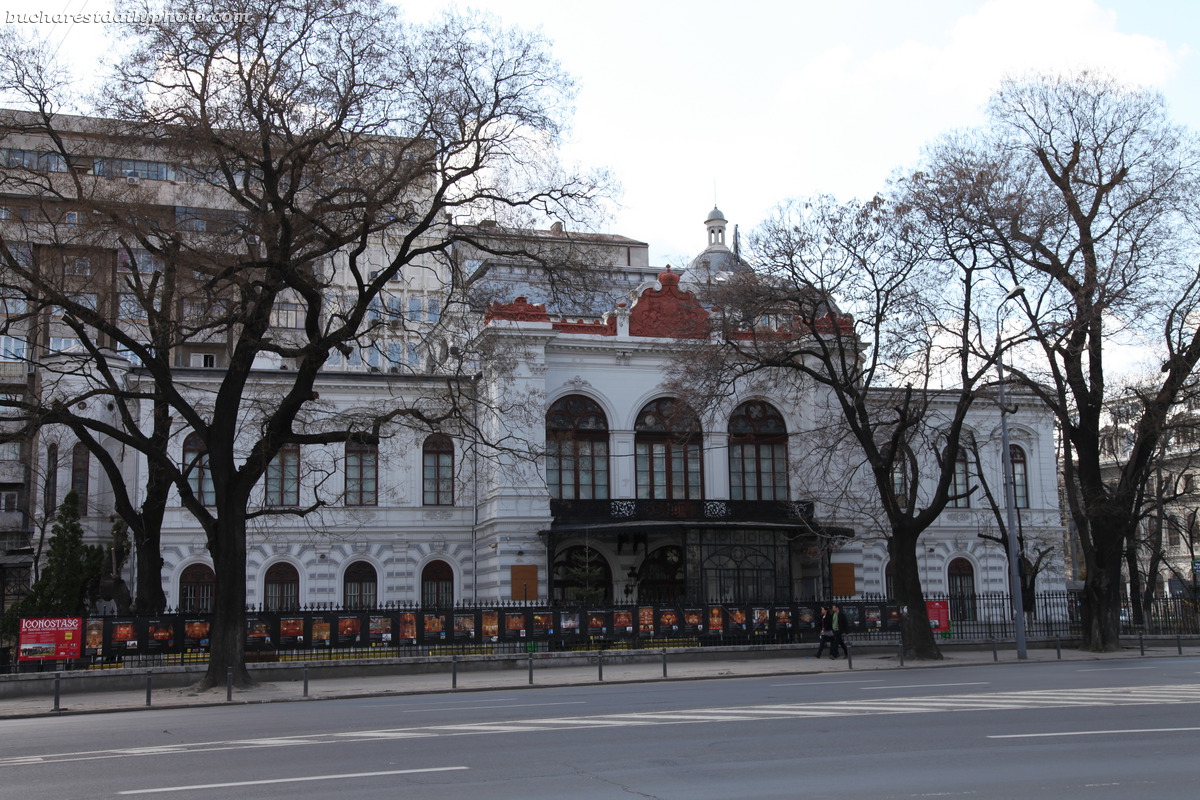
This is another shot of the Museum of the City of Bucharest, this time showing the whole building. I took the photo back at the beginning of April when the trees were still bare.
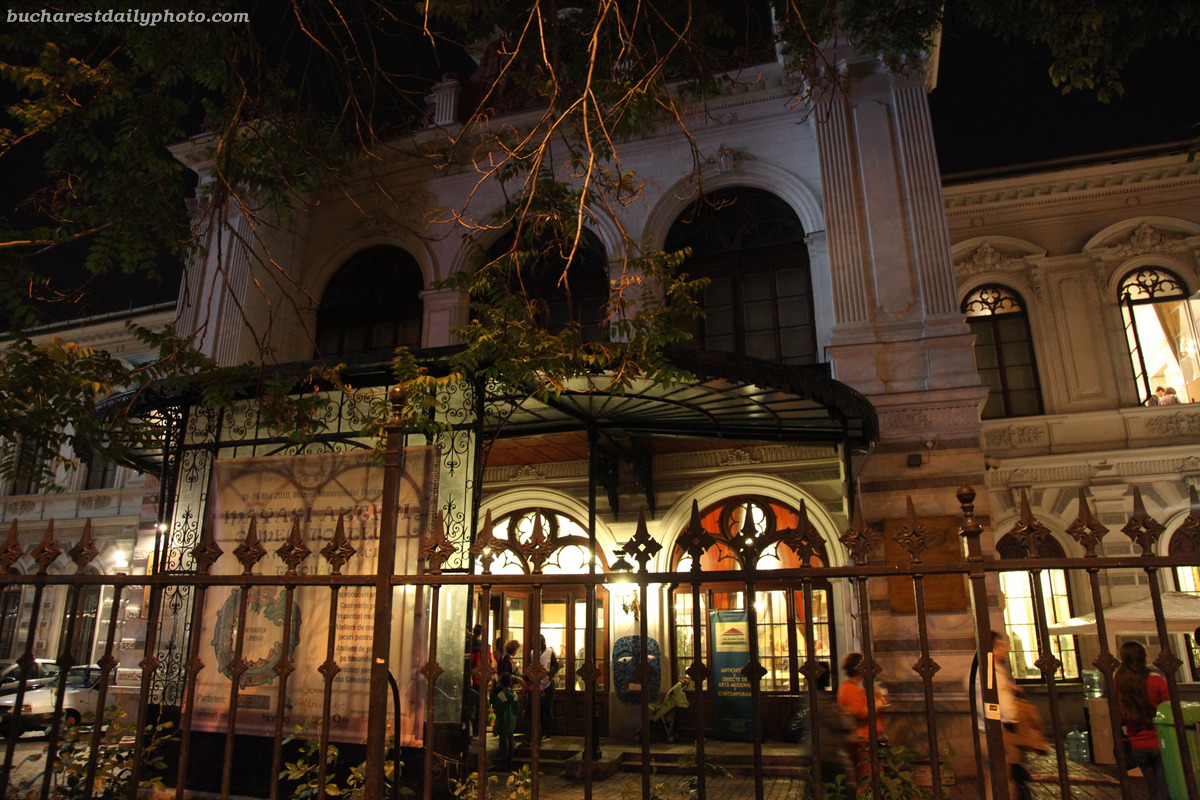
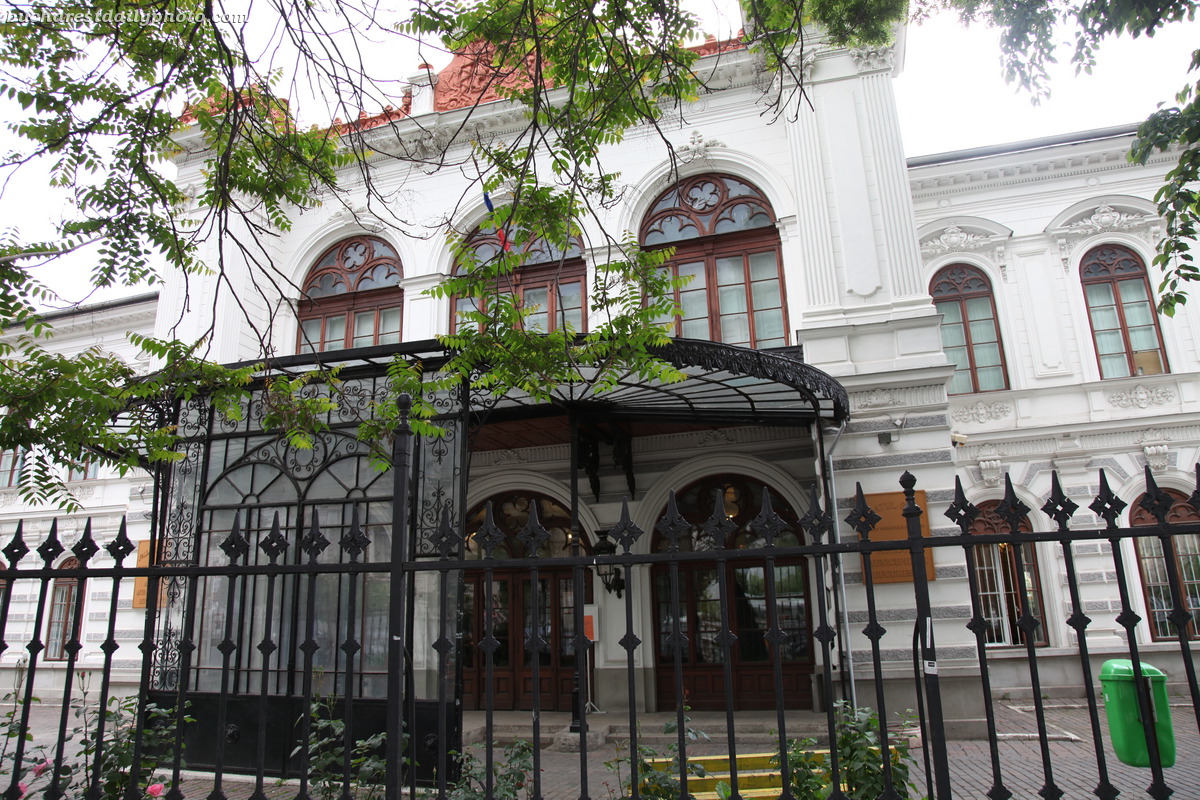
These two shots show the mansion that houses the Museum of the City of Bucharest which is located in the University Square. The building is also known as Suţu Palace after the name of its builder, Costache Suţu. It was raised in 1833-1835 following the plans of Viennese architects Conrad Schwink and Johann Veit. The style of the building is considered to be neo-gothic. The palace was inherited by Costache Suţu’s son, Grigore Suţu, which together with his wife Irina, hosted many balls, receptions and dances at the palace, attracting Bucharest’s high society. After their death the palace was passed on, hosting first the headquarters of the Chrissoveloni Bank and later the offices of Romania’s National Savings Bank. In 1959 it became the Museum of History of the City of Bucharest.
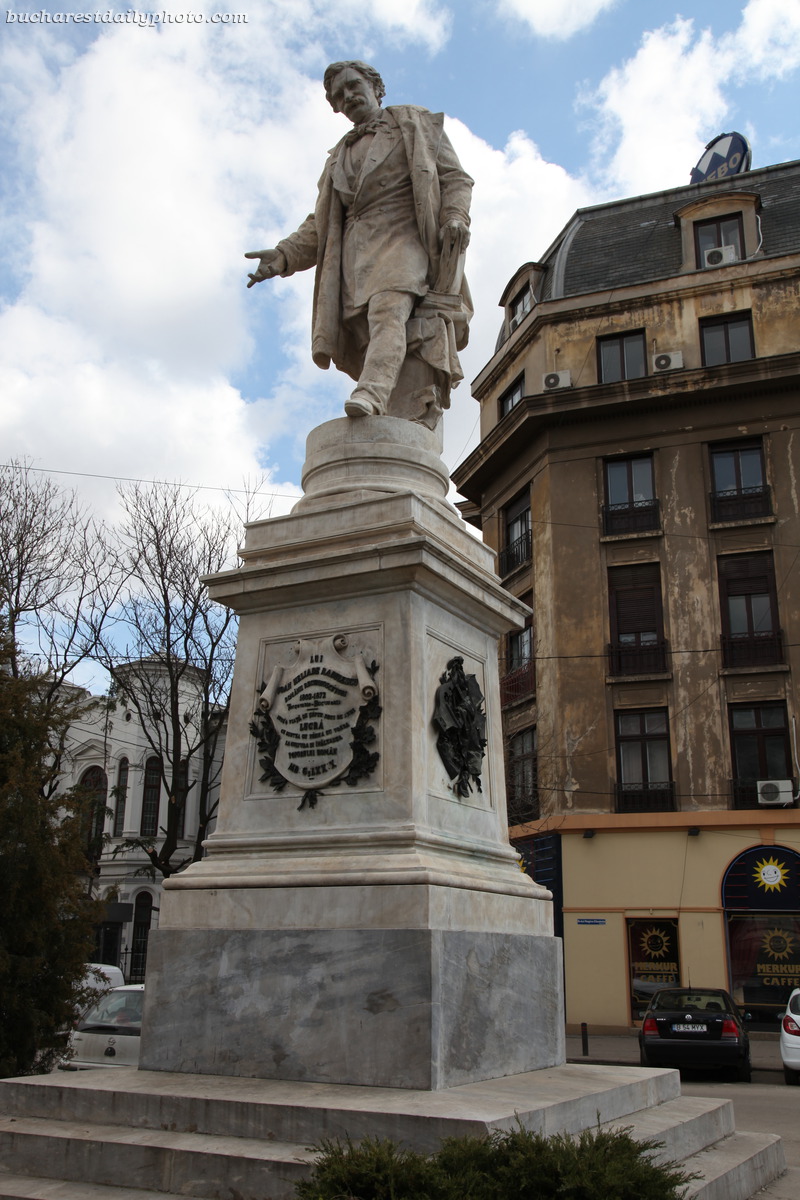
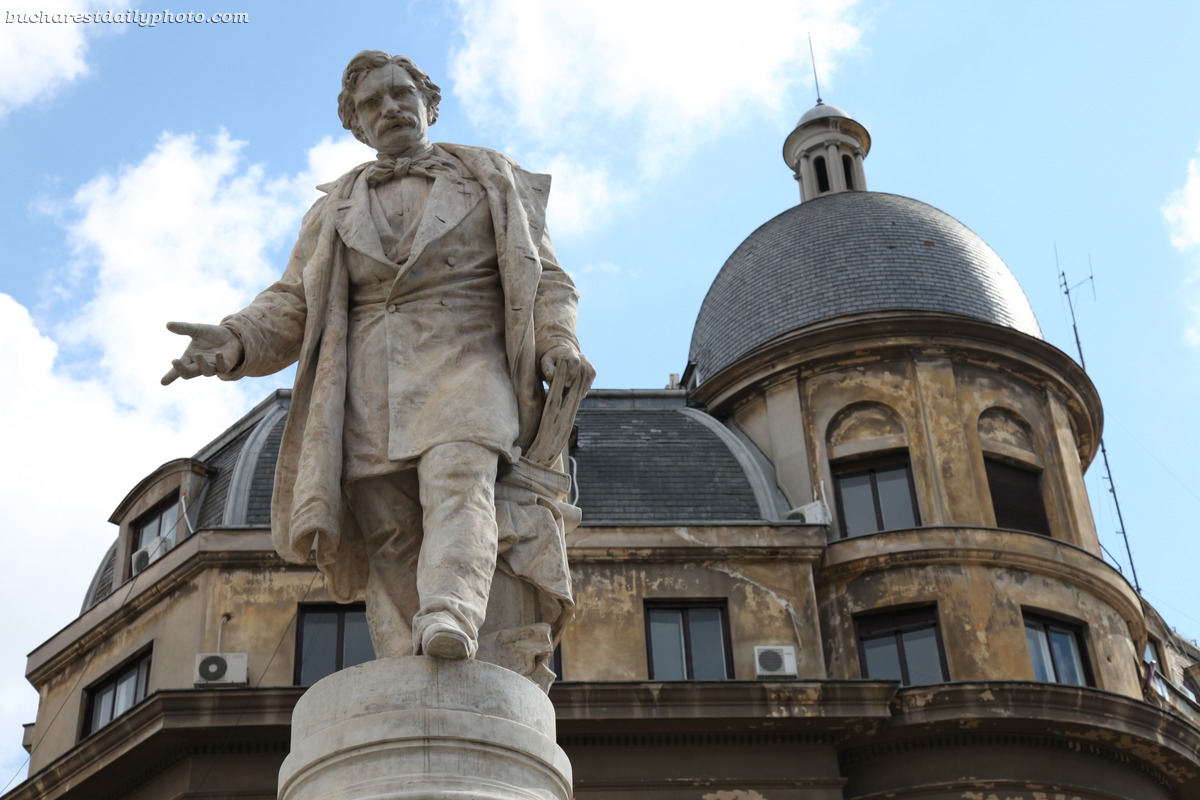
The fourth statue located in the University Square is that of Ion Heliade Rădulescu, “Romanian academic, Romantic and Classicist poet, essayist, memoirist, short story writer, newspaper editor and politician”, “prolific translator of foreign literature into Romanian”, “founding member and first president of the Romanian Academy”. The marble statue shows him holding a book in his hand, a fitted portrayal considering that he “is considered one of the foremost champions of Romanian culture of the first half of the 19th century”. The statue is the work of the Italian sculptor Ettore Ferrari and was unveiled in 1881.
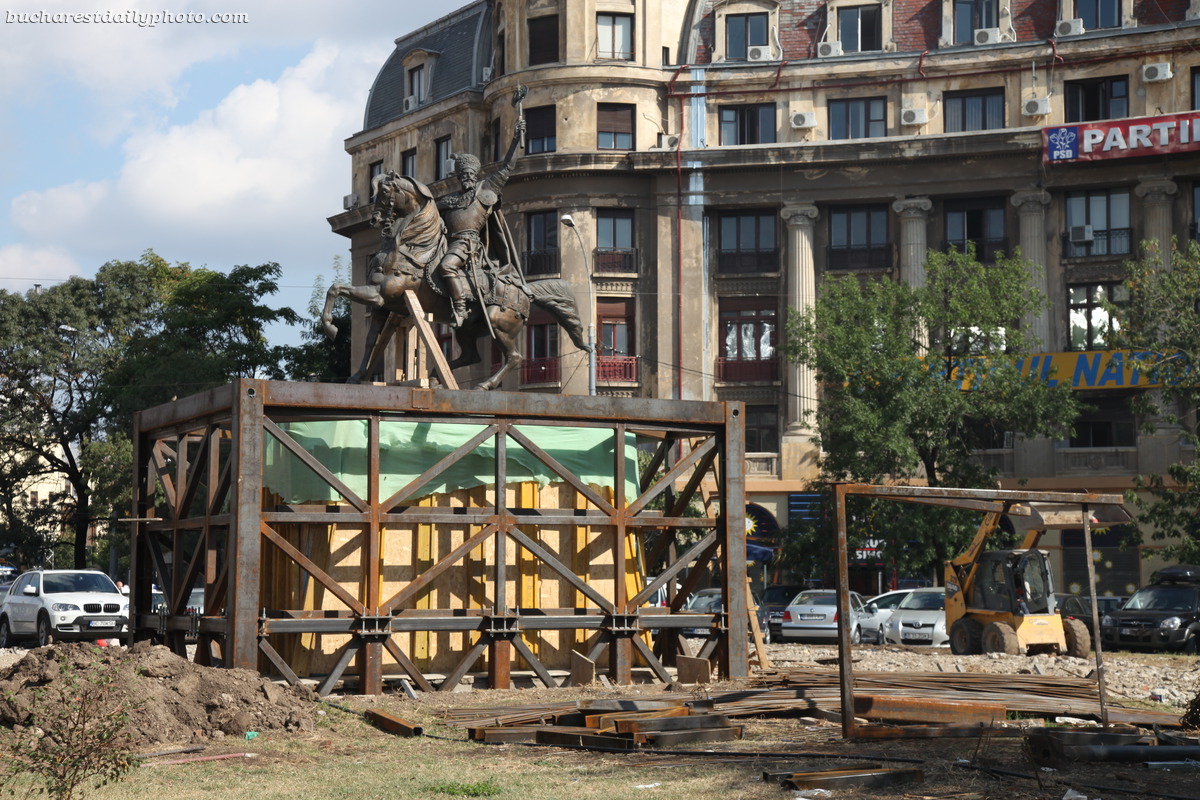
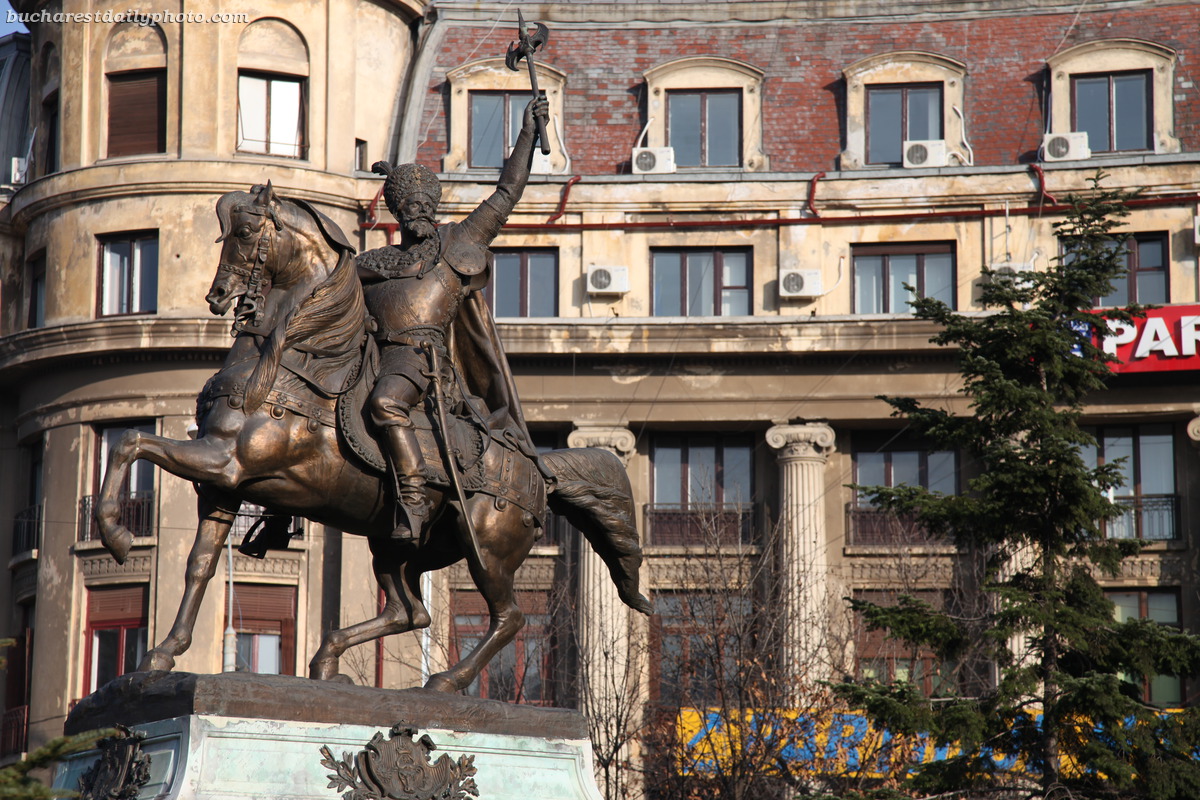
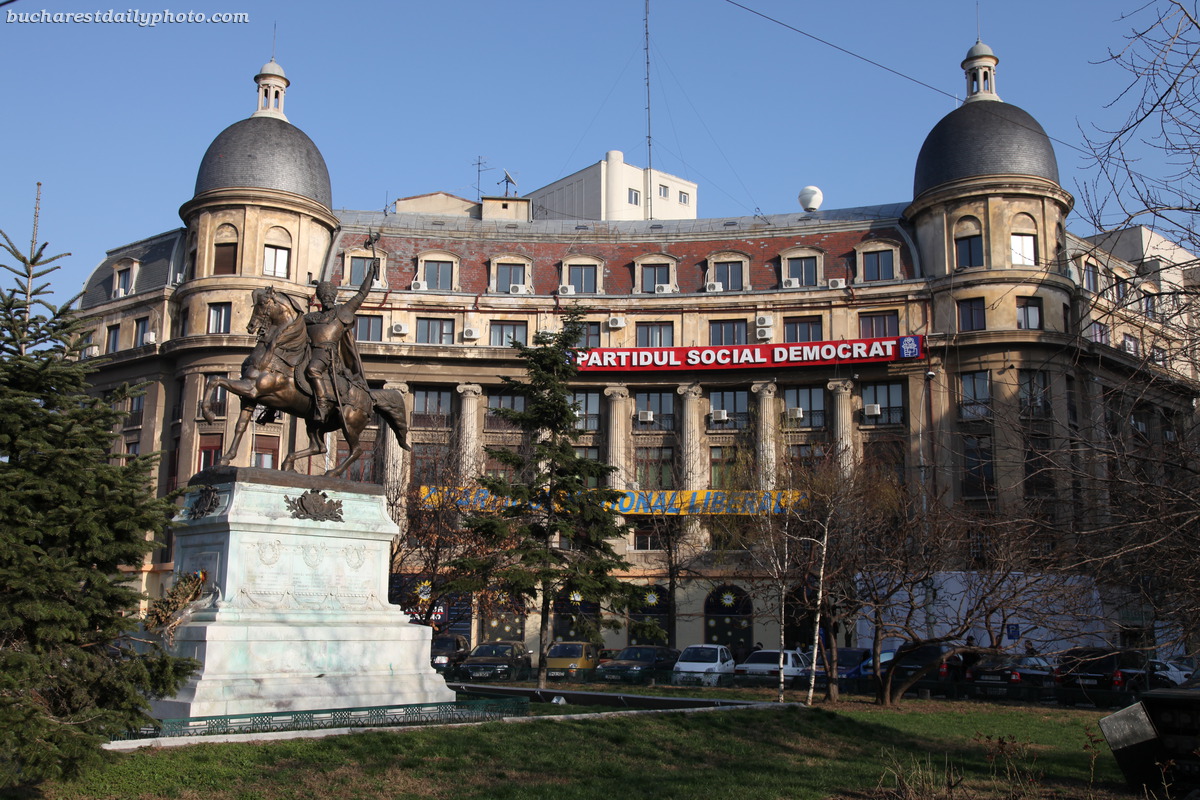
Two days ago I found out from comments on this blog that the University Square is soon going to be dug because of a underground parking lot which is supposed to solve all the parking problems of Bucharest (yeah, right, and I’m about to land on Moon). So I thought I’ll post a few more pictures from the square before it’s forever changed by construction work. I’ve posted pictures of two of the four statues located in the square (Spiru Haret and Gheorghe Lazăr) and today’s photographs introduce another one, the bronze equestrian statue of Michael the Brave (1558 – 1601), prince of Wallachia, of Transylvania and of Moldavia. He’s regarded as one of Romania’s greatest heros for ruling as a single leader over the three provinces that make up present day Romania. He achieved this in 1600 and the union lasted only six months. The three provinces only came together again in 1918. The statue dates from 1874 and is the work of the French sculptor Albert-Ernest Carrier-Belleuse (1824-1887). It’s the oldest statue in Bucharest representing a political personality.
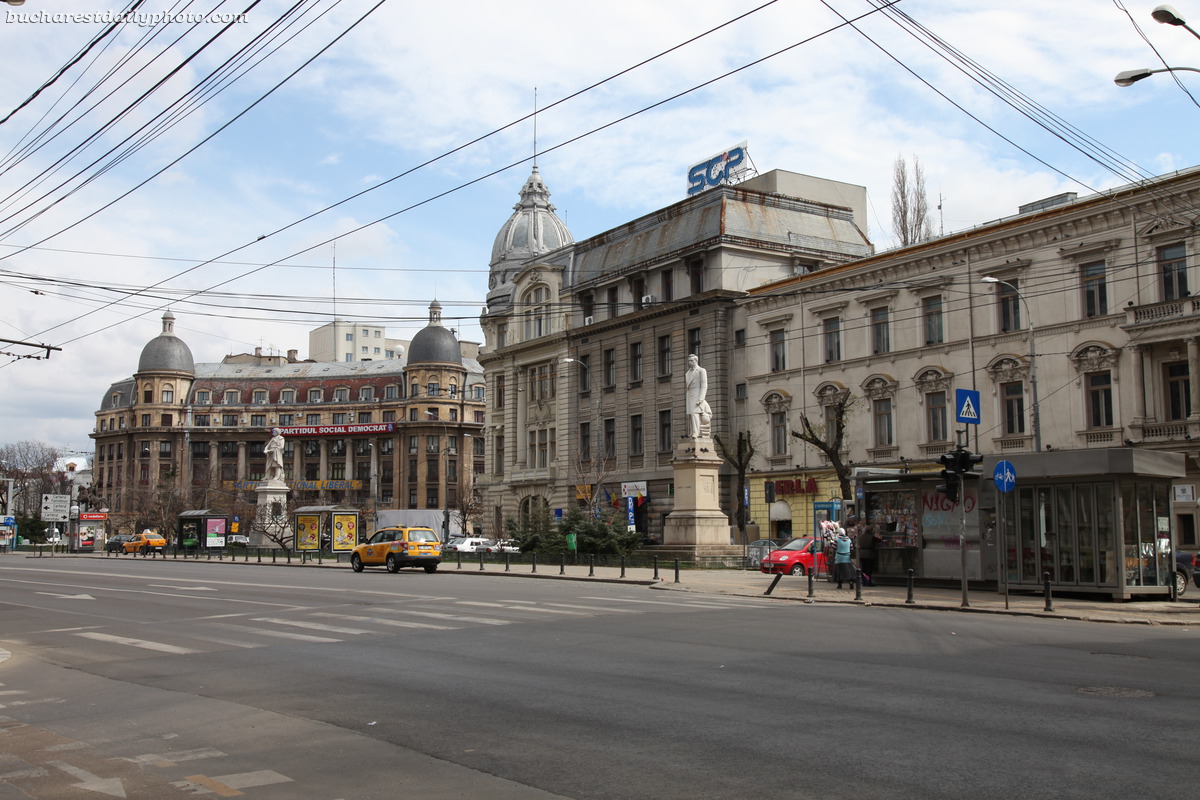
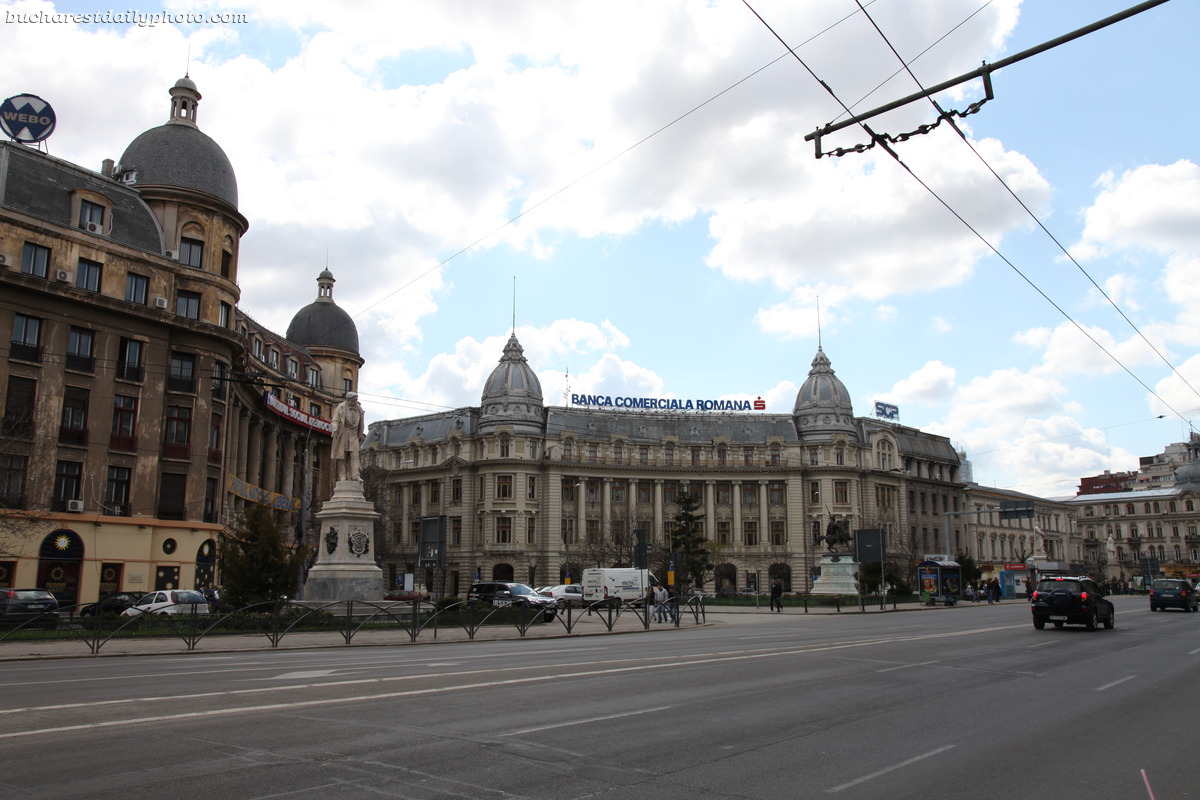
It occurred to me that even though I’ve talked many times about University Square, the center of the city, I’ve never shown it to you. Even though most people call the entire area around the square by that name, the actual University Square is the one with the four statues, located in front of the University of Bucharest building. This square is usually so crowded and full of traffic that I found it really hard to take a nice picture. The reason it’s looking so empty in today’s photographs is because I took these photos on the Saturday before Easter.
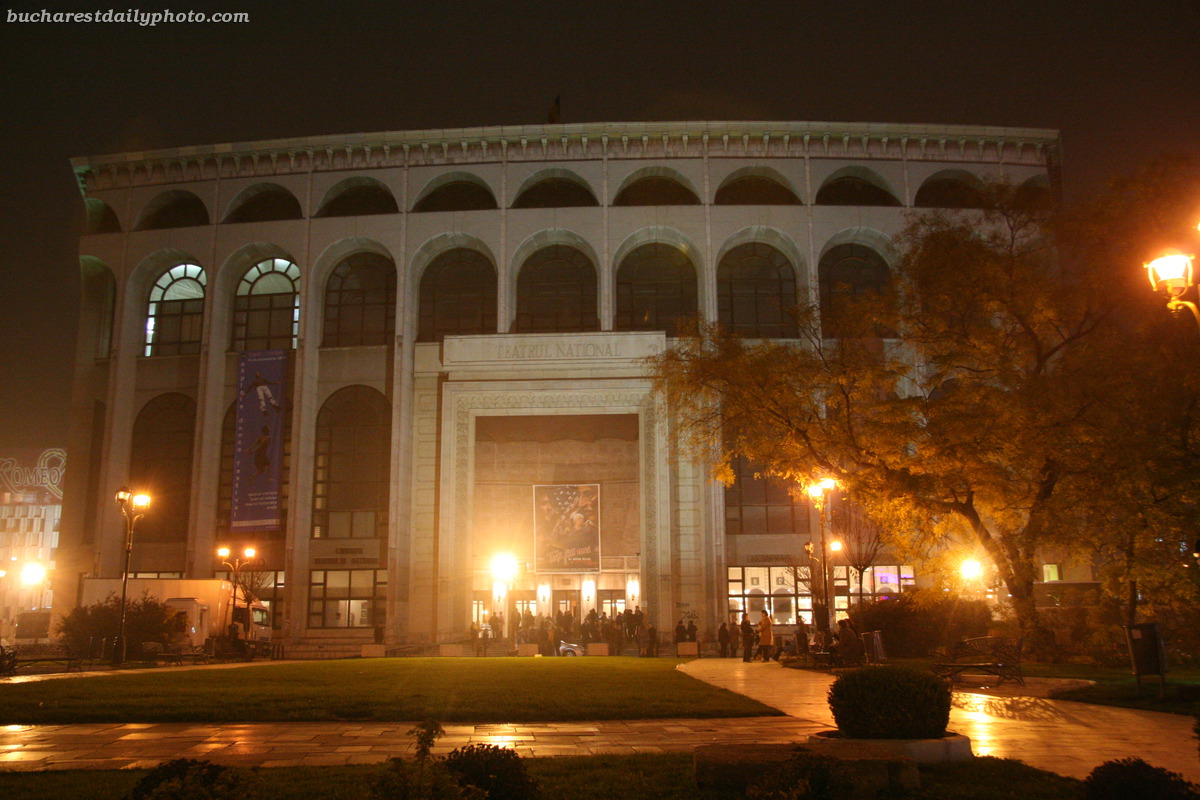
In my earlier post about Bucharest’s National Theatre I’ve talked about its facade being remodeled in 1984, which lead to the version which can be seen in today’s photograph. The theatre is scheduled to undergo renovation soon and if everything works as planned in two years we will admire a new facade, similar to the 1973 version!
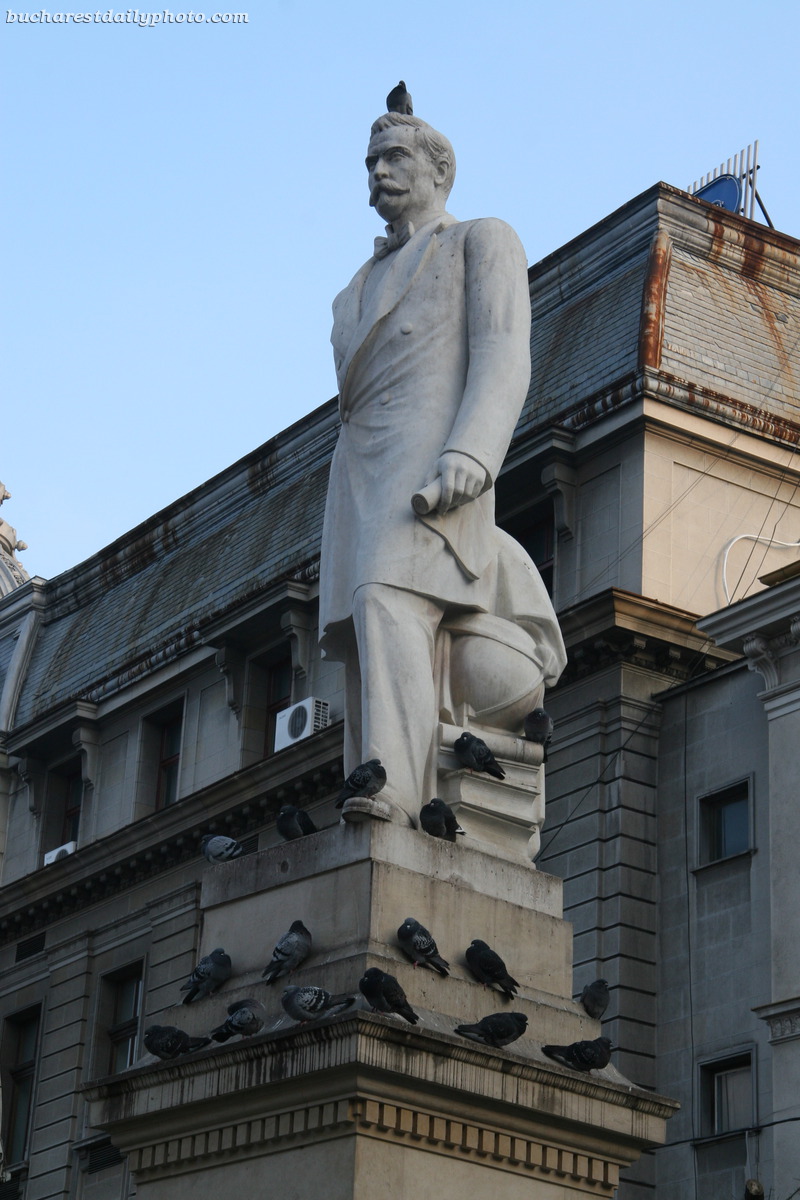
Out of the four statues in the University Square, the one in today’s photograph is the one that seems to agree by far with the square’s pigeons. In fact, the last few times I passed through the square there were no pigeons on any of the other three statues. The statue is that of Spiru Haret (February 15, 1851 – December 17 1912), mathematician, astronomer, professor and politician, who served as the Minister of Education three terms and brought reforms that helped build the Romanian education system. The statue is by Ion Jalea and was placed in the square in 1935.
I like shooting night time pictures of Bucharest. I guess that’s because, like many big cities, Bucharest feels like a different place at night, a calmer, not as chaotic and demanding place as during the day. This is why you’ve already seen many night shots on my blog and there are more to come.
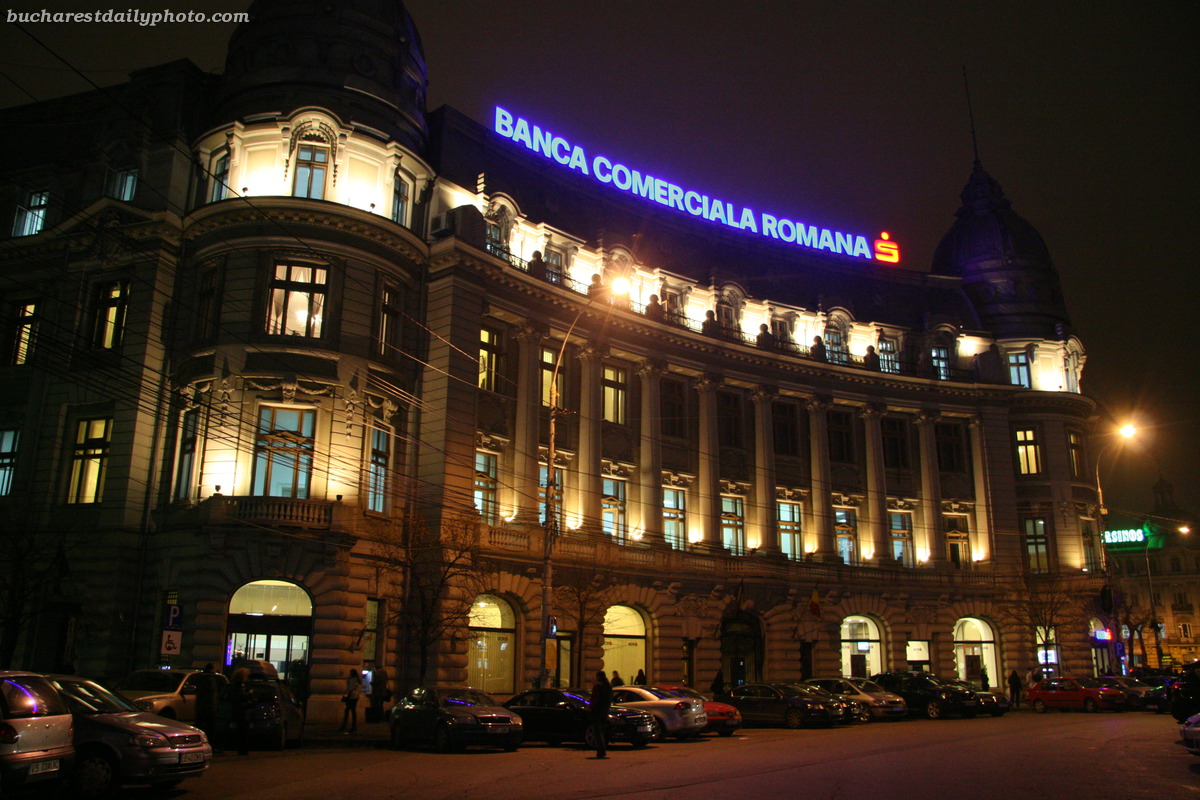
Remember the dome featured in the “white blankets” photo from two days ago? It belongs to the building in today’s photo, the classical and elegant headquarters of the Romanian Commercial Bank, built in 1906 by architect Oscar Maugsch for the Generala Insurance Company.
With the arrival of the new snow, all the statues in the city have received white blankets to protect themselves from the cold. Such is the case of the statue in today’s photo, one of the four statues located in University Square, representing Gheorghe Lazăr (June 5, 1779 – September 17, 1821) a Transylvanian-born Romanian scholar who founded the first Romanian language school in Bucharest in 1818. The statue was executed in 1886 by the sculptor Ion Georgescu.
Believe it or not we used to celebrate Christmas during communism although not officially of course (for those who don’t know, the communists are atheists). Christmas came packaged with New Year Celebration and they were officially known as “The winter holidays”. We decorated the Christmas tree with whatever we were able to find and on December 24th, “Father Winter”, Santa Claus’ identical twin, arrived with presents. I remember when Father Winter (a colleague of my parents) came to bring me presents when I was about 5 years old. I was so nervous that I forgot the poem I was supposed to recite. However, he was nice and left me presents nonetheless. By and large I had a happy childhood during communism despite the lack of some basic needs. I realize now that it was thanks to my parents who tried to shelter me from life’s reality.
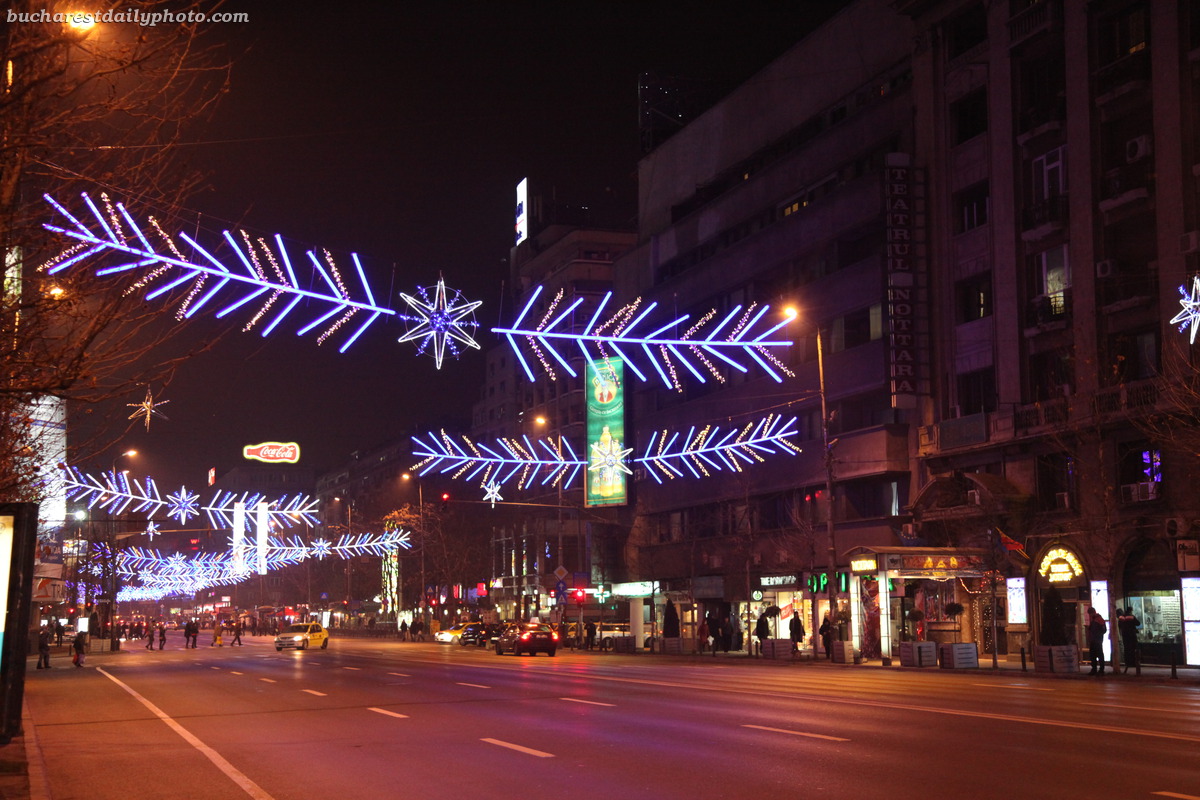
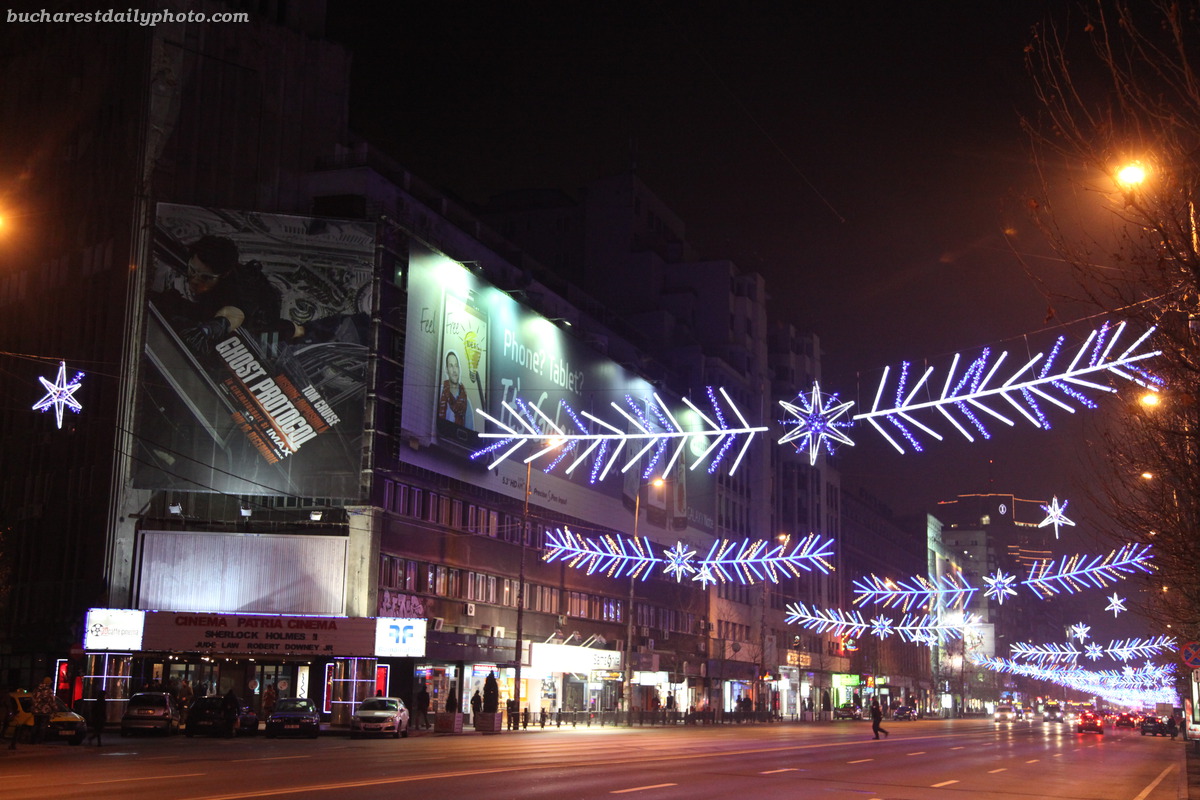
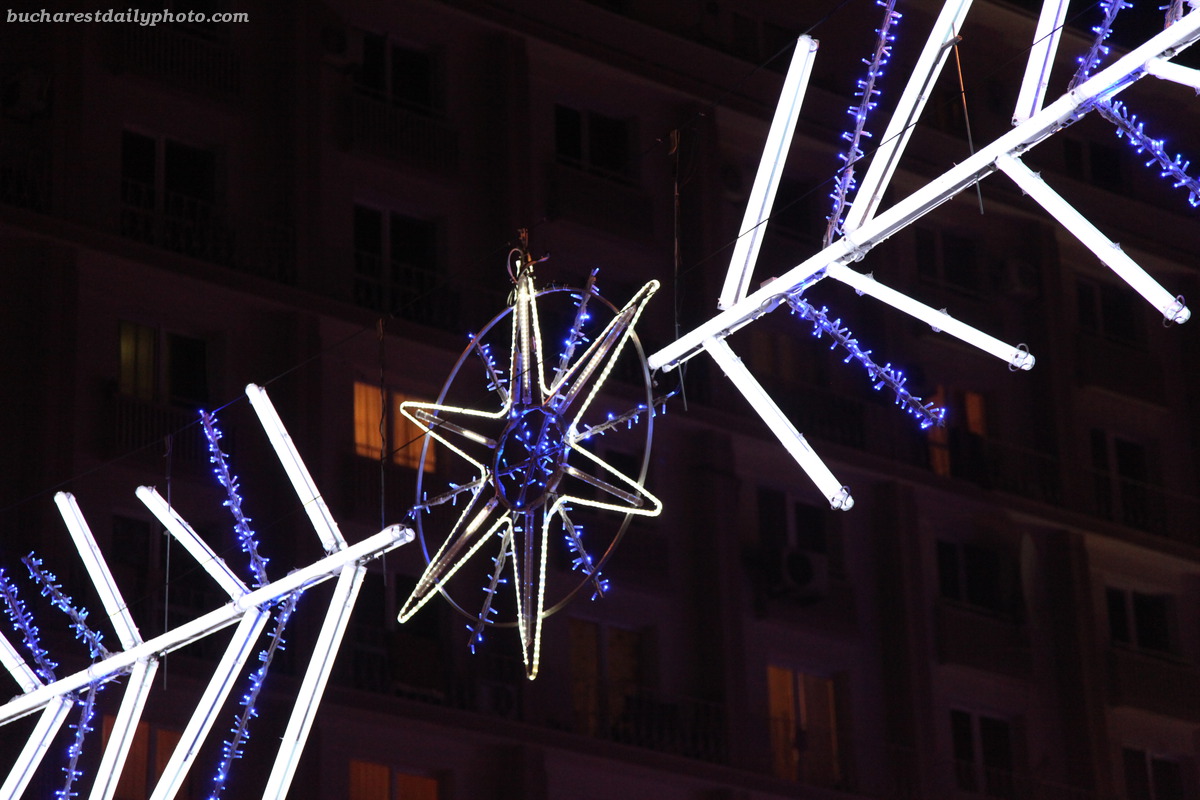
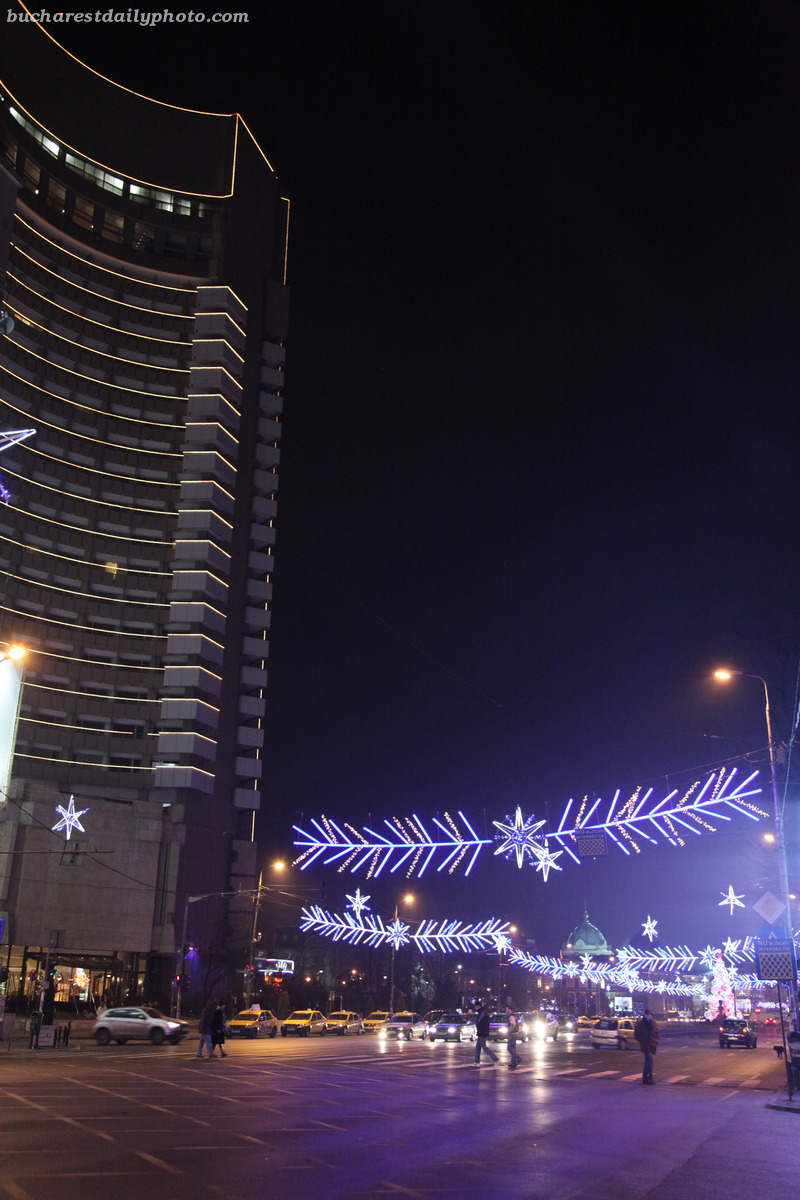
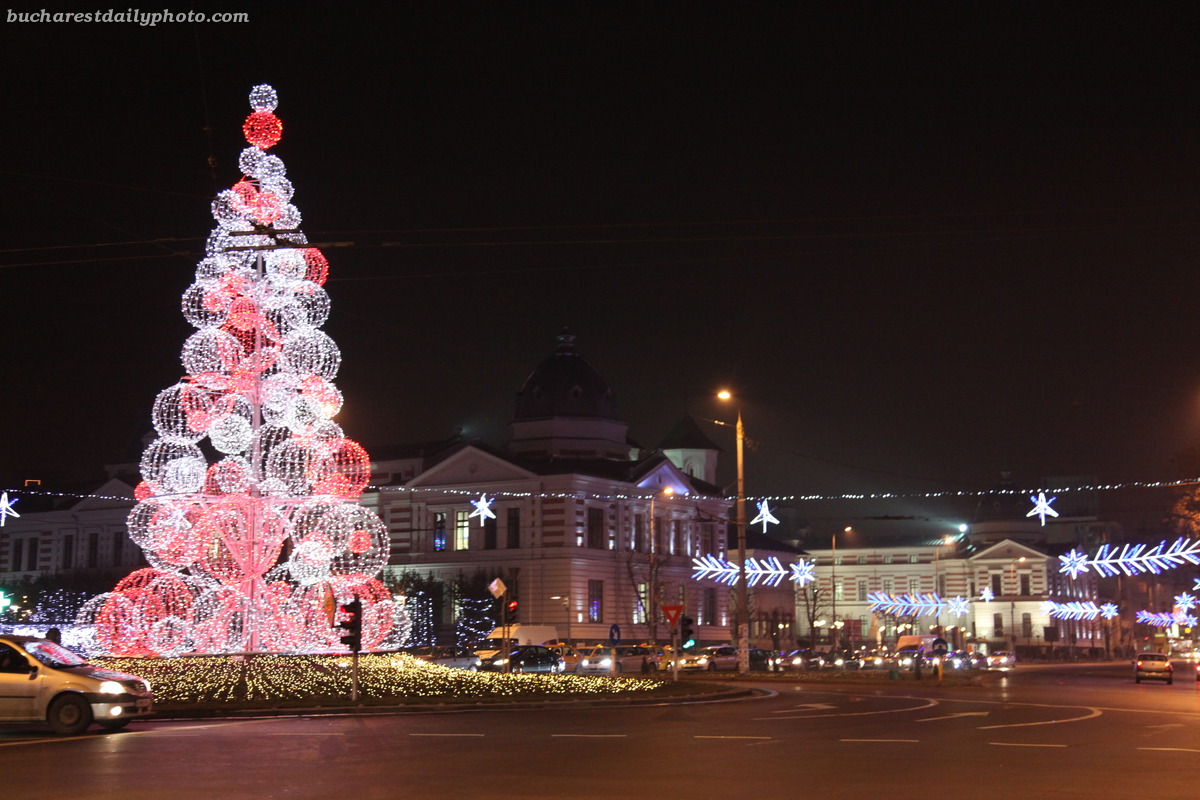
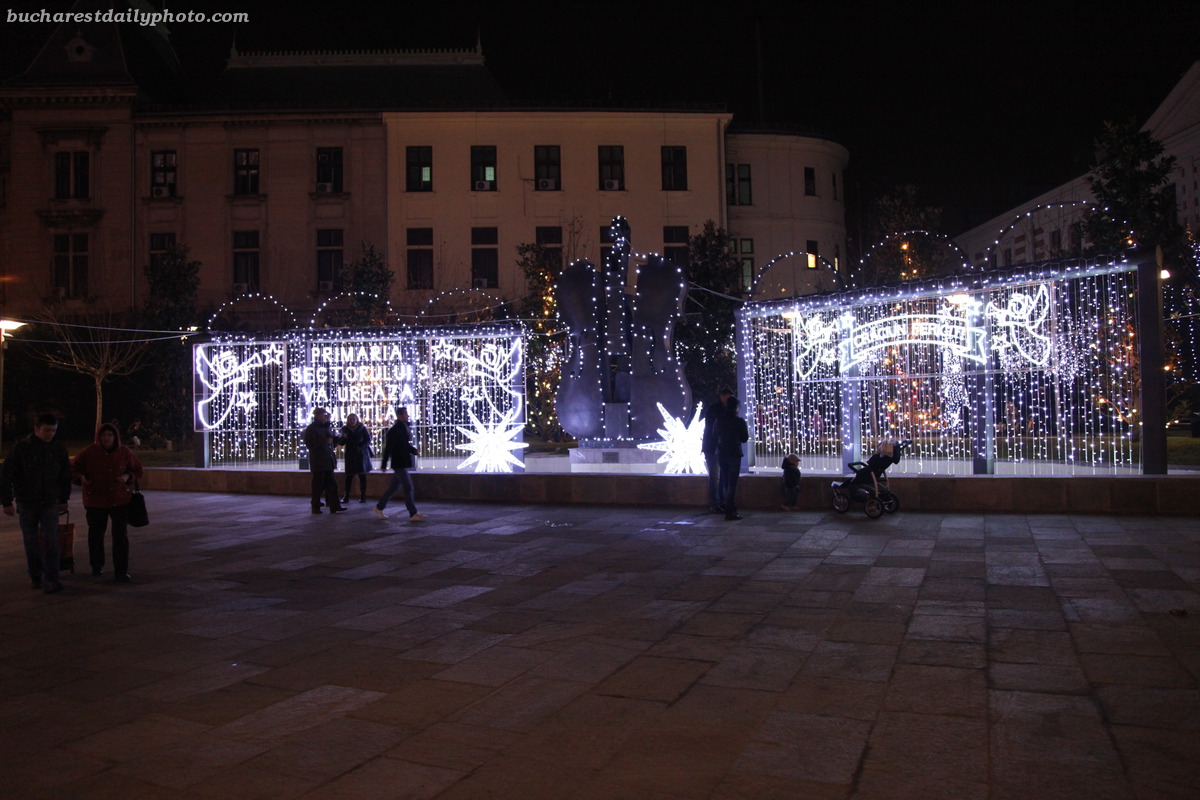
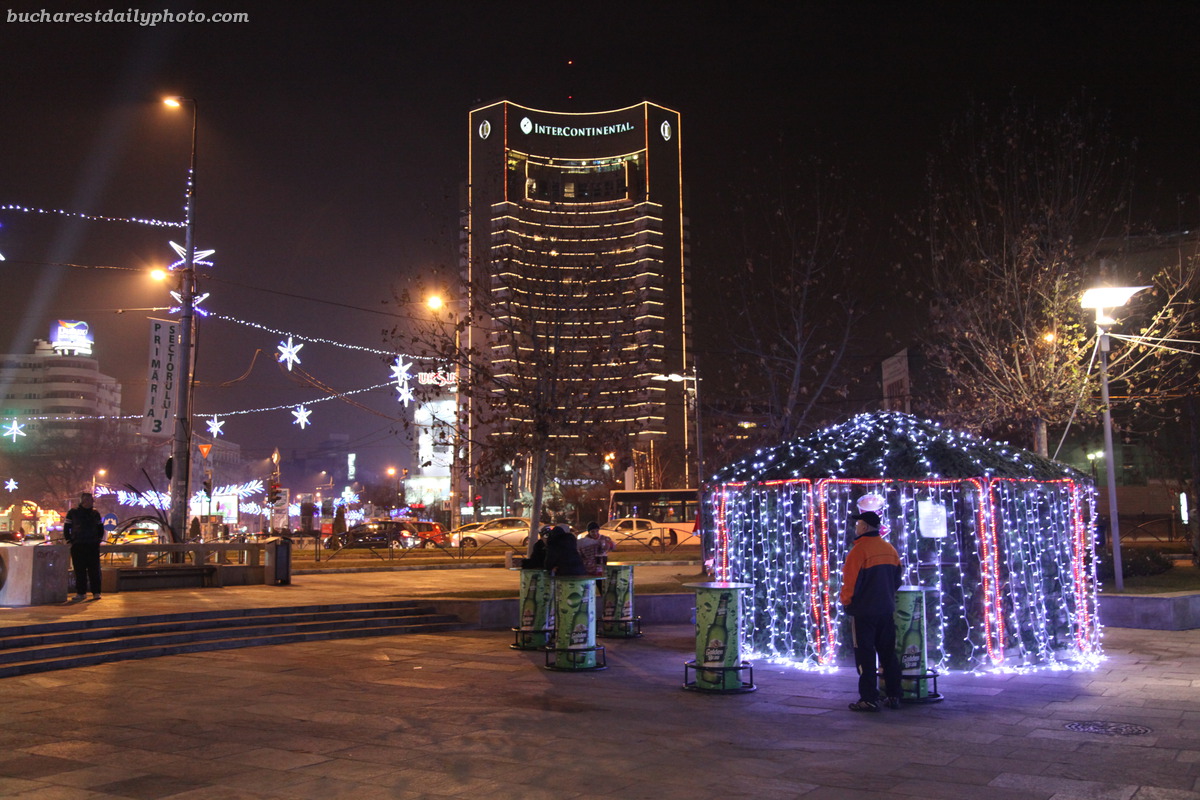
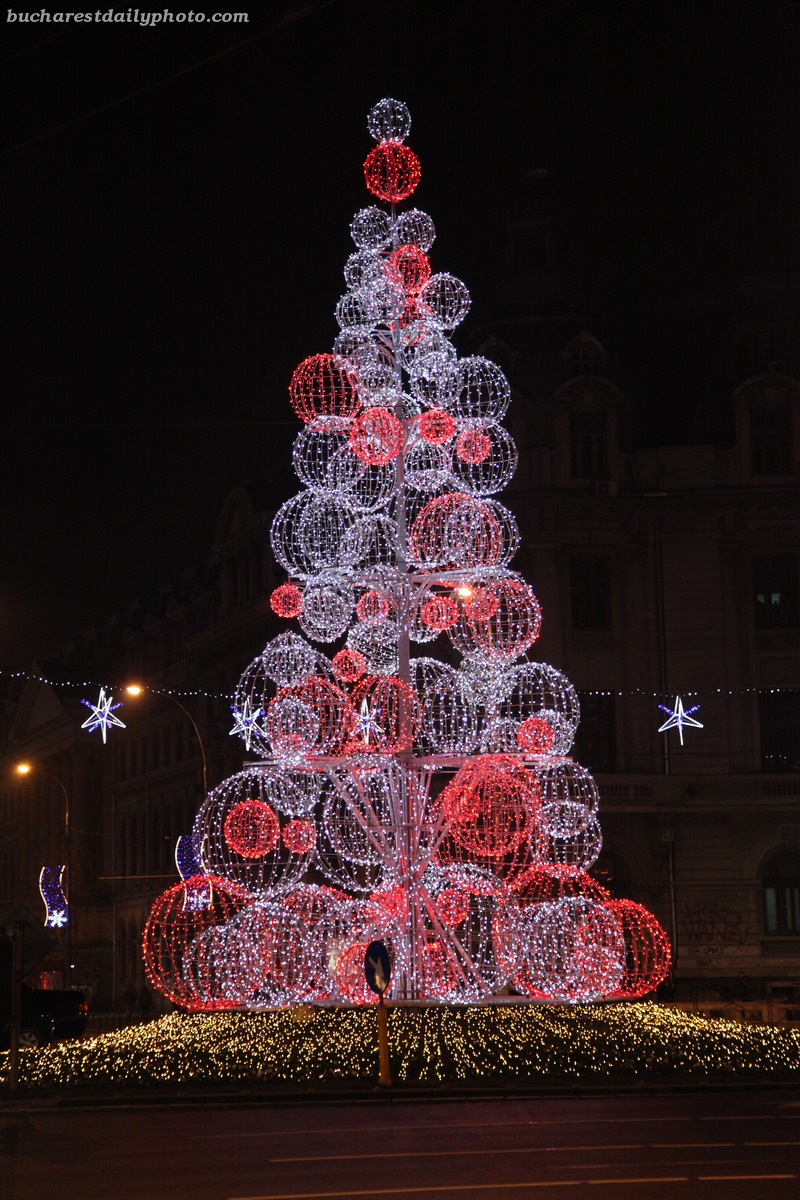
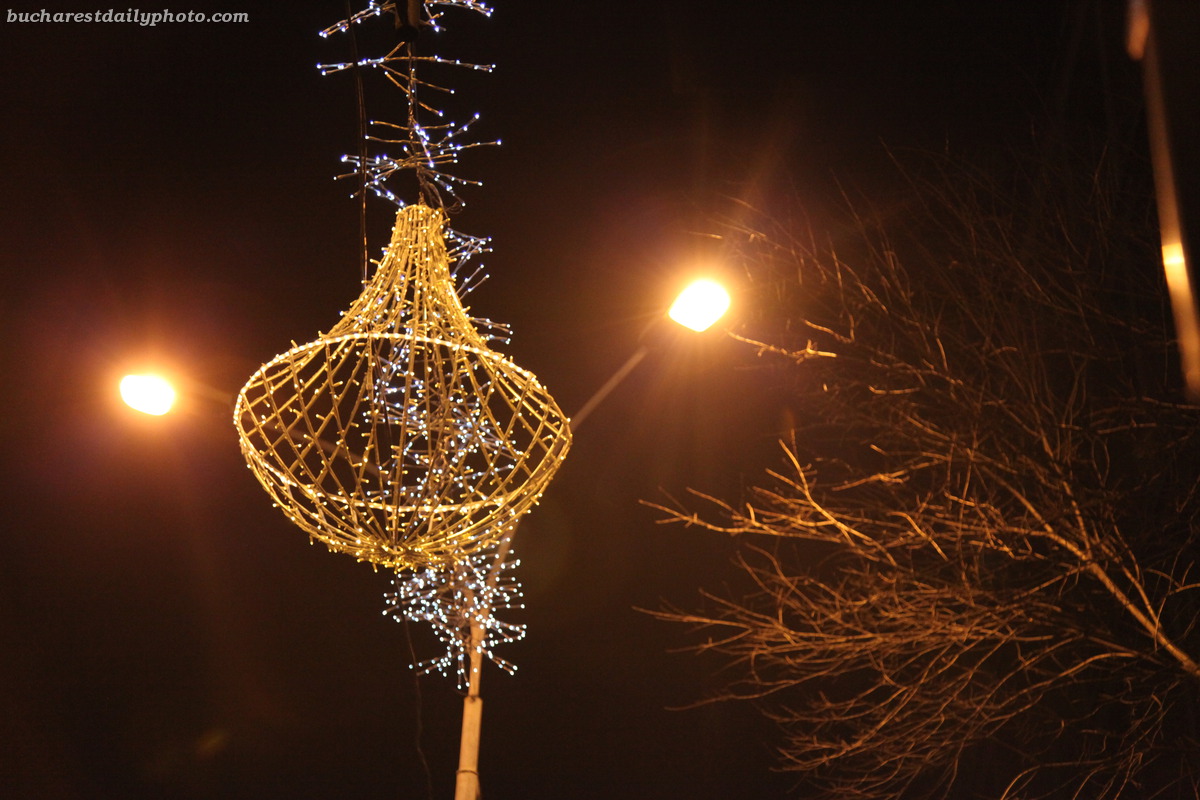
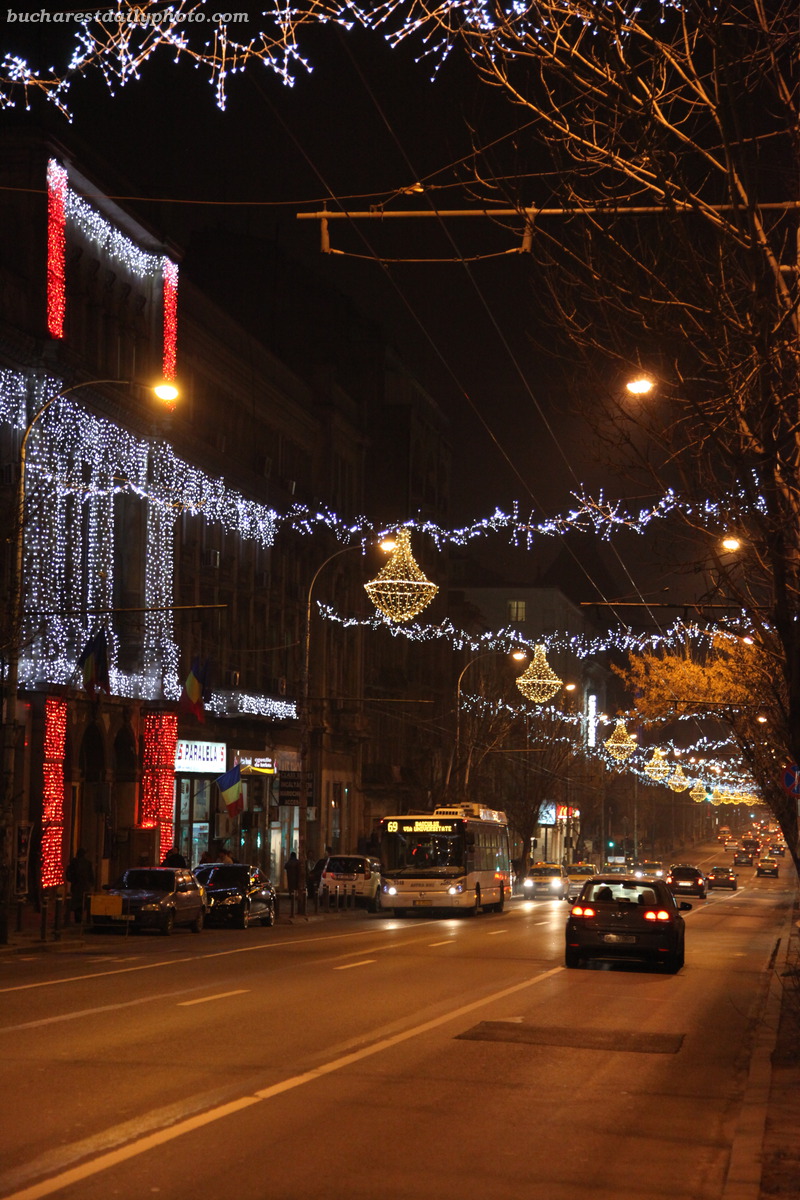
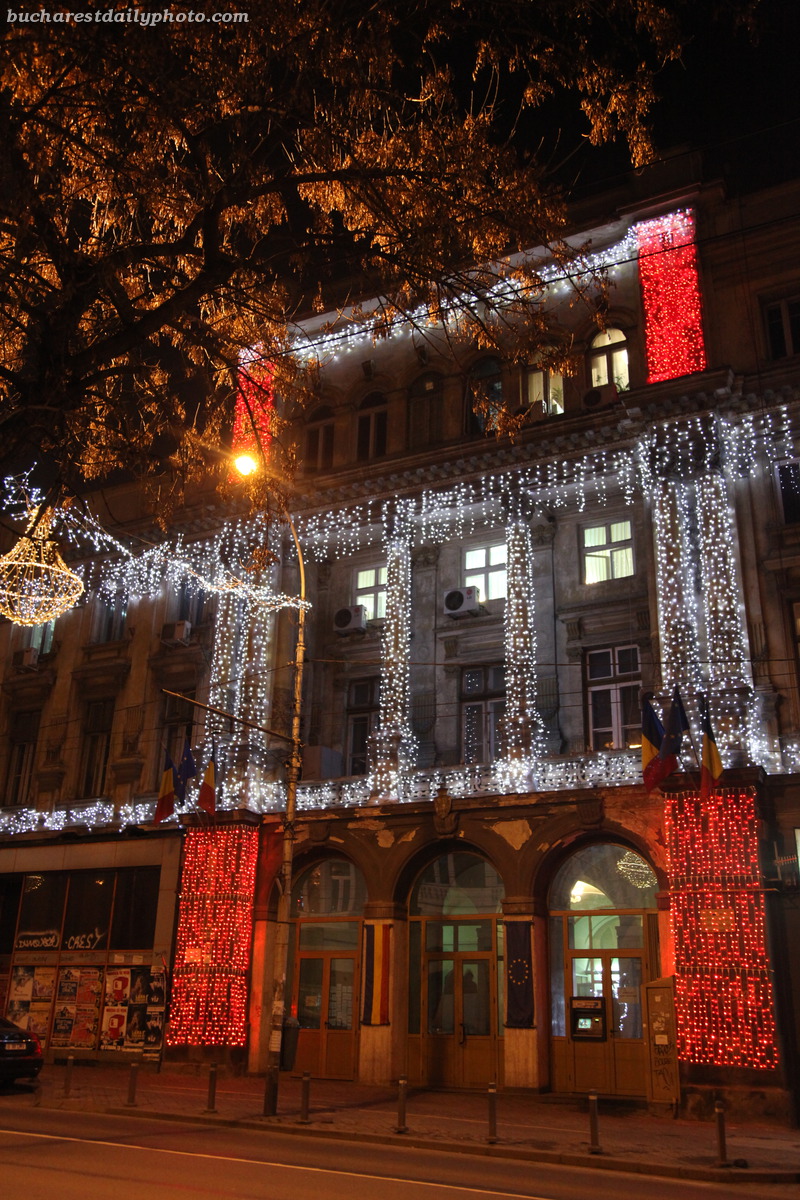
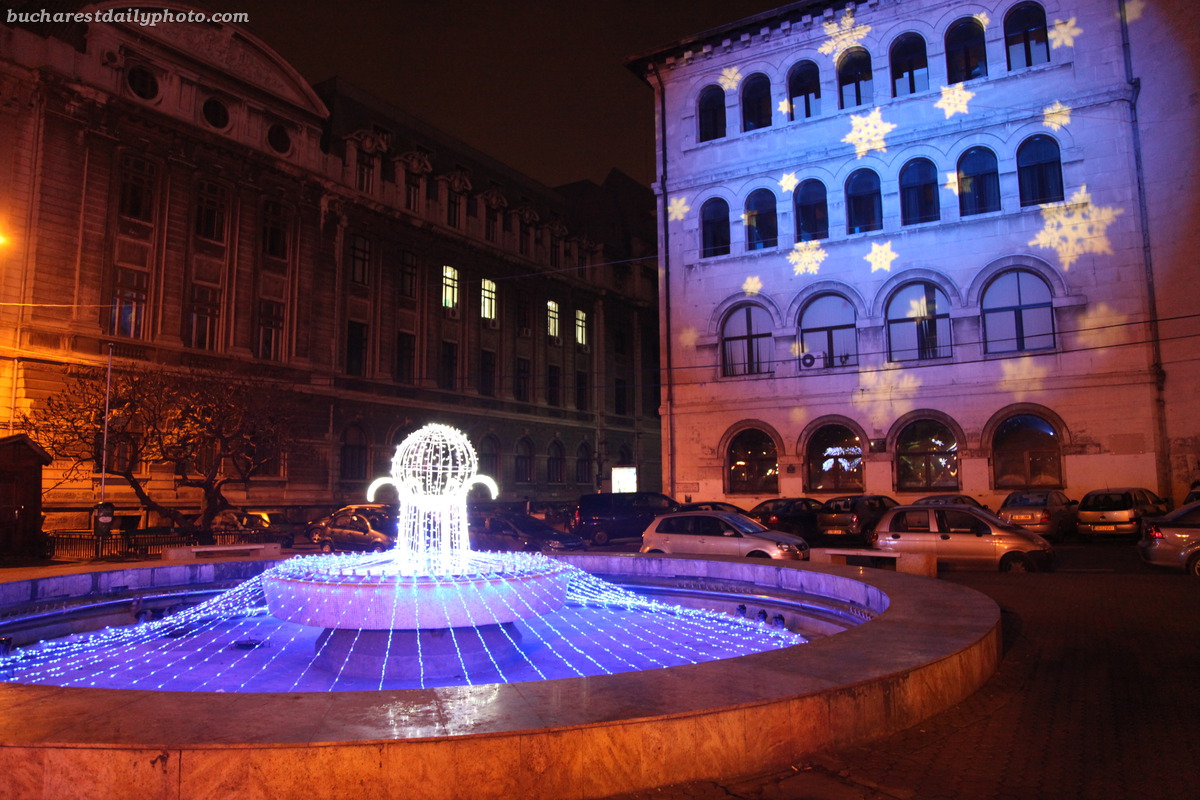
The picture above is from Romană Square. The next two are taken on Magheru Boulevard where the city hall reused some of last year’s decorations (cost cutting in the economic downturn I think). The last one is showing the University roundabout.