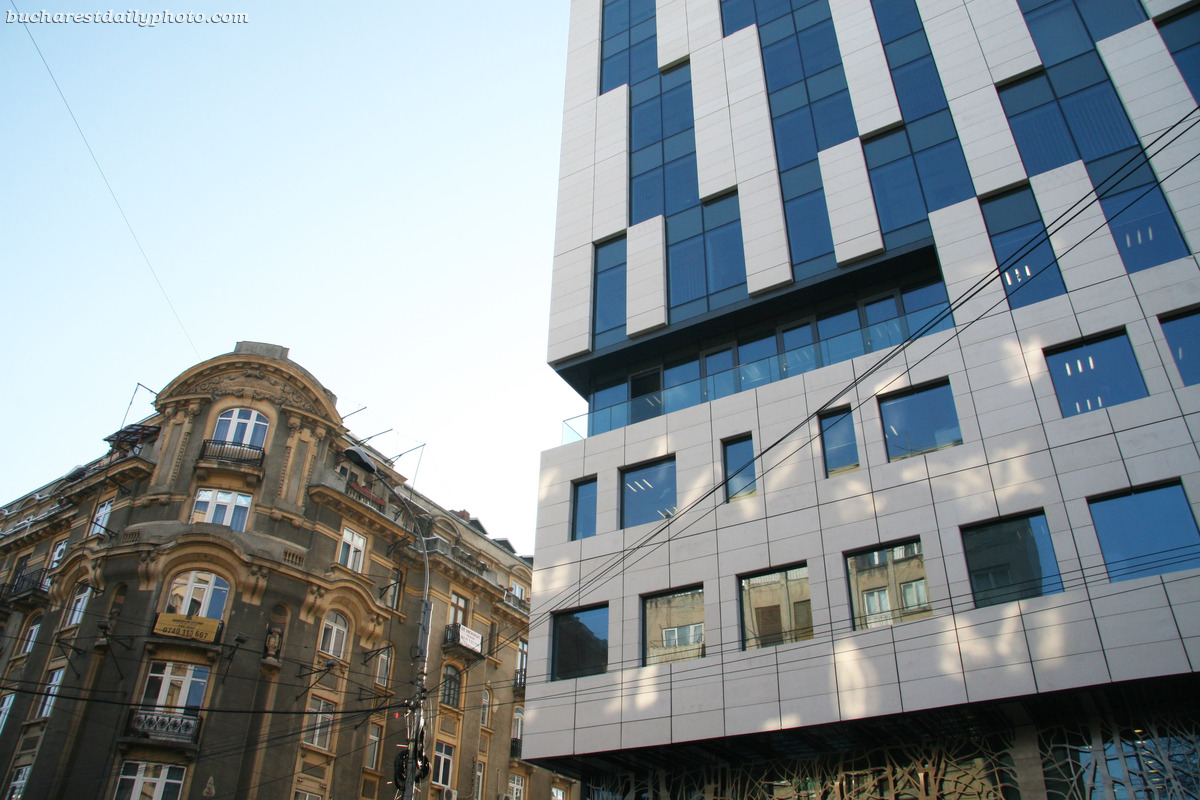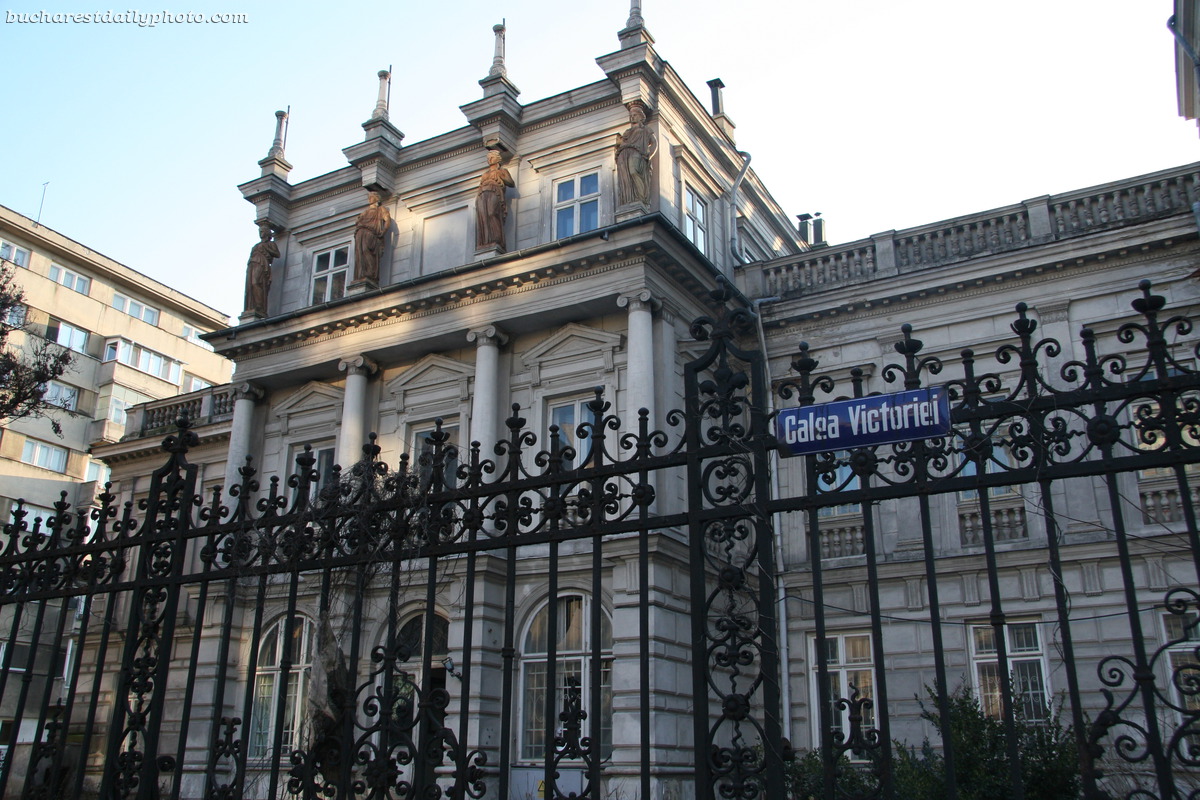
The Victory Avenue (Calea Victoriei in Romanian) is one of Bucharest’s most important avenues. It was built as a main road in 1692 under orders from Constantin Brâncoveanu who needed a road to link his palace at Mogoşoaia with the Old Court. In the beginning the street was known as Podul Mogoşoaia aka Mogoşoaia Bridge, because it was paved with wood. In 1878, after the Romanian War of Independence, the victorious Romanian army entered the capital and marched along this avenue, and that’s when the name changed to Victory Avenue. Between the two world wars Calea Victoriei became one of the most fashionable streets of the capital. Following this avenue from United Nations Square (Piaţa Naţiunilor Unite in Romanian) to Victory Square (Piaţa Victoriei in Romanian) you’ll find some of the most beautiful buildings in Bucharest. Among these are the Naţional History Museum, the National Savings Bank or CEC building, the National Military Circle, Capşa House, the Art Deco Telephone Palace, the Creţulescu Church, the Central University Library, the Romanian Athenaeum, the Royal Palace which today houses the National Art Museum and the Cantacuzino Palace. I’ve already posted photos of some of these buildings on this blog and you can see them by following the “Victory Road” label. Today’s photo shows the classical facade of another beautiful building lining Calea Victoriei, Ştirbei Palace. It was built in 1833-1835 after plans by architect Michel Sanjouand.
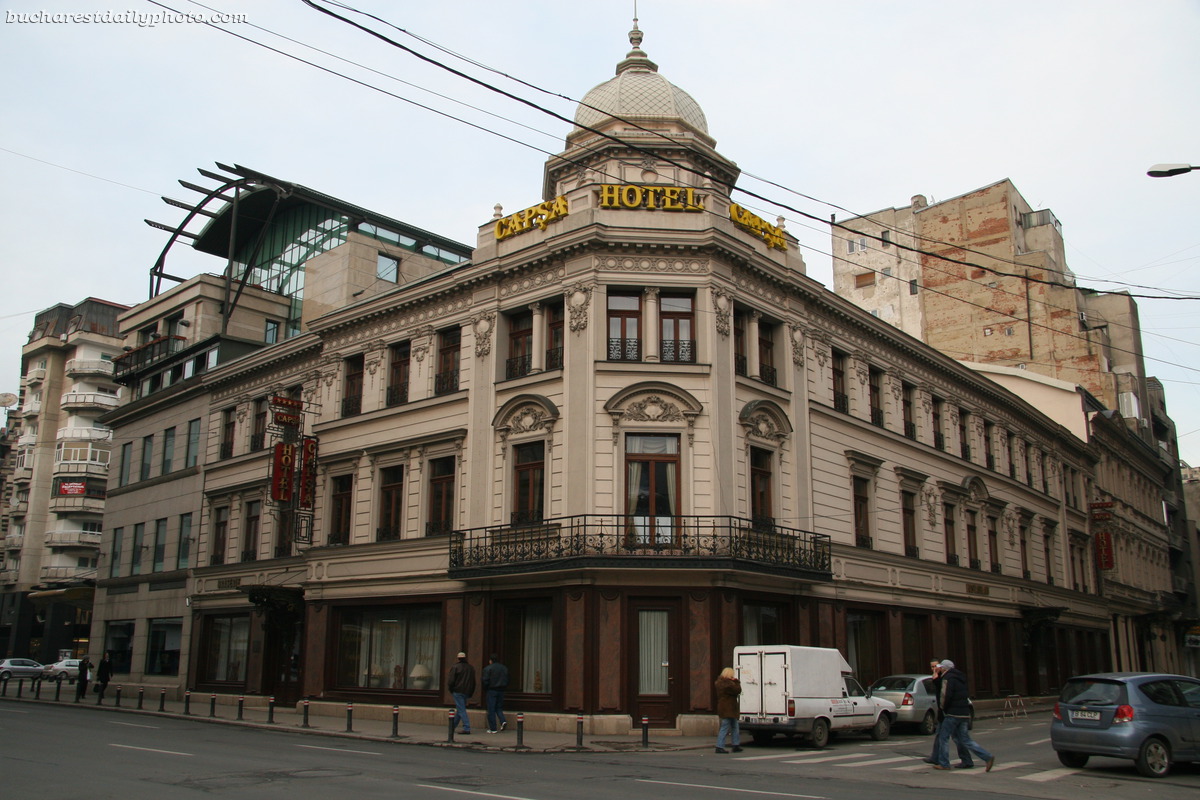
Capşa House (Casa Capşa in Romanian), “Restaurant, Hotel, Café and Confectionery”, was for long period of time the symbol of the Romanian elite society, a meeting place for politicians, journalists, artists, writers, etc. It all started in 1852 when two brothers, Anton and Vasile Capşa, opened a confectionery shop on Calea Victoriei, a short distance from the present location of Capşa House, which was opened as a confectionery shop by their younger brother Grigore Capşa (1841-1902) in 1868. Grigore Capşa had just returned from Paris, where he apprenticed for four years at the renowned Maison Boissier. Soon, he established a solid reputation as a known brand all over the continent, becoming the supplier for the Royal Court of Romania in 1869 (until then the Royal House was bringing the confections from Paris). Serbian and Bulgarian courts followed in 1882 and 1908, respectively. In 1886 the hotel and the restaurant opened. The hotel was quickly recognized as the most elegant Romanian hotel, winning, together with the confectionery shop, lots of awards and distinctions. Finally, in 1891, the owners opened Capşa cafe, which became the center of the fashionable life in Bucharest. With so many members of the high society and politicians frequenting this place, it was said that governments were made and broke at Capşa. After 1930s the writers made the cafe their meeting place. The writer Tudor Arghezi made even a short portrait of the “writer who goes to Capşa”. He wrote “The Capşa man is an inteligent and dangerous individual and the real critique is done at Capşa, not in the literary press. If you’re stupid at Capşa is impossible to be smart anywhere else, even in writing”. The decline of the Capşa House came with the arrival of the communist regime, when it was run by the state under the name “Bucharest. Brasserie and restaurant”. After the fall of communism, Casa Capşa was restored quite beautifully in 2002-2003 and reopened as an elegant 5 star hotel. Unfortunately they didn’t succeed in giving back its spirit and glamour which can only be relived now in the history books.
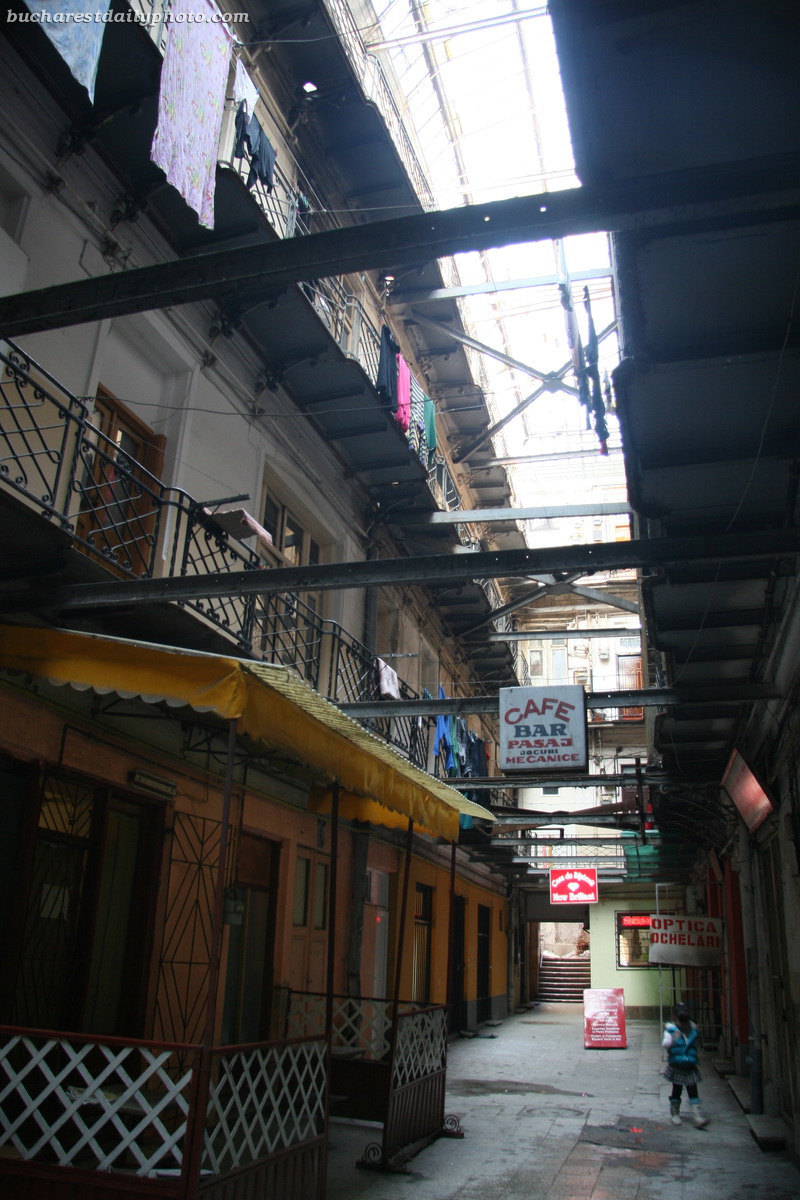
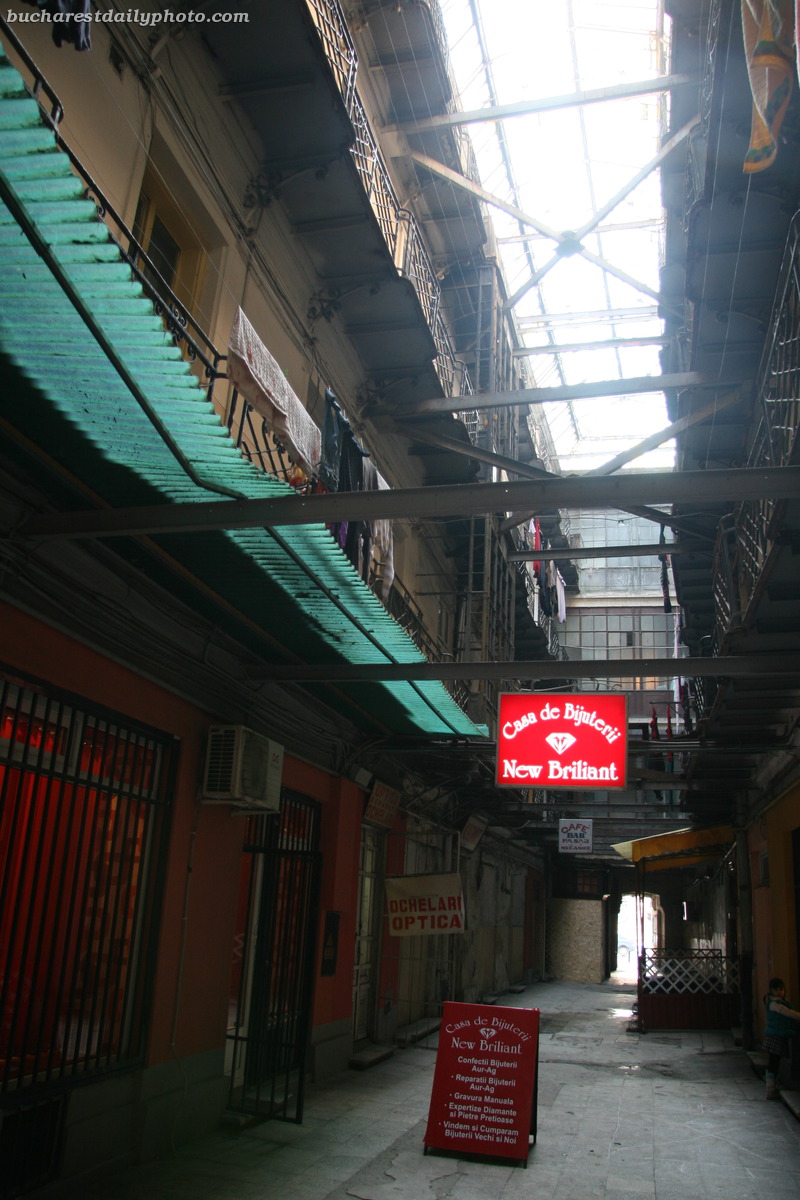
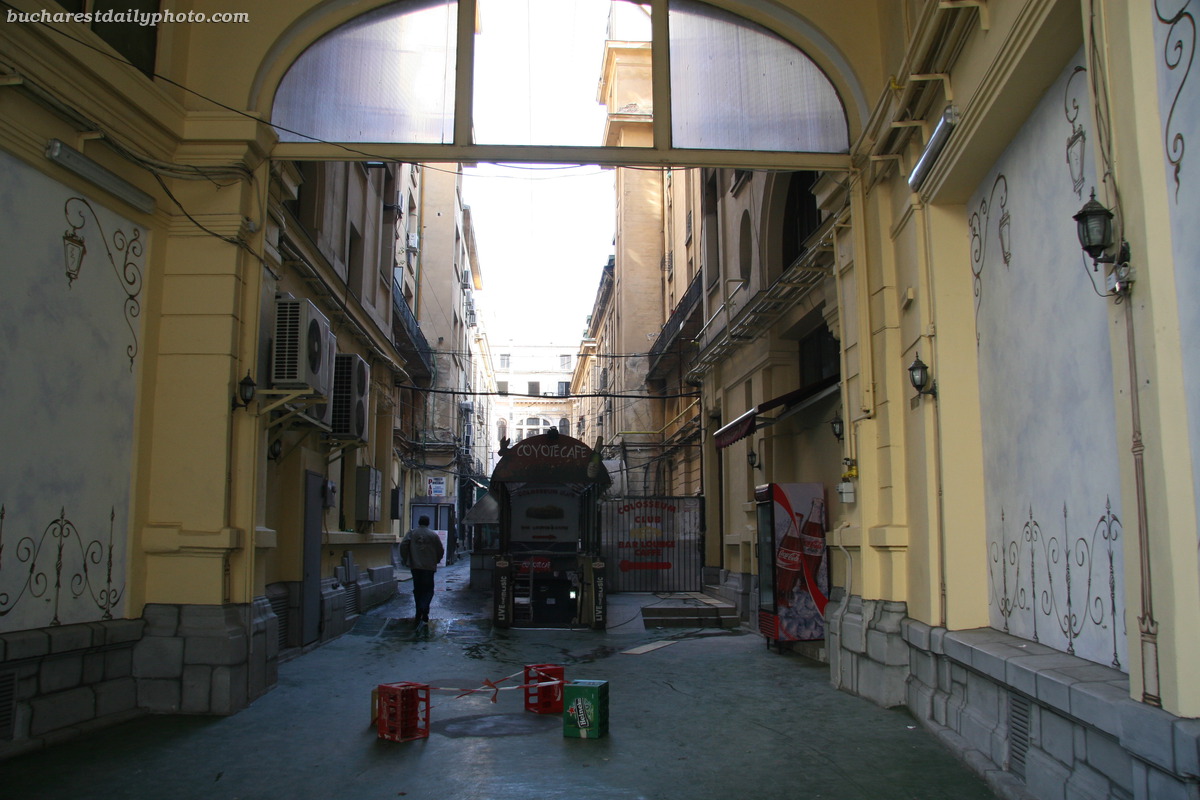
This is Victoria Passage, linking Calea Victoriei with Academiei Street. It appeared a lot in the news in the summer of 2008 when the press got word of plans to demolish two of the historical buildings located inside the passage. It was the same story as always, such a piece of real estate in downtown Bucharest would sell for a small fortune. So far the buildings are still standing.
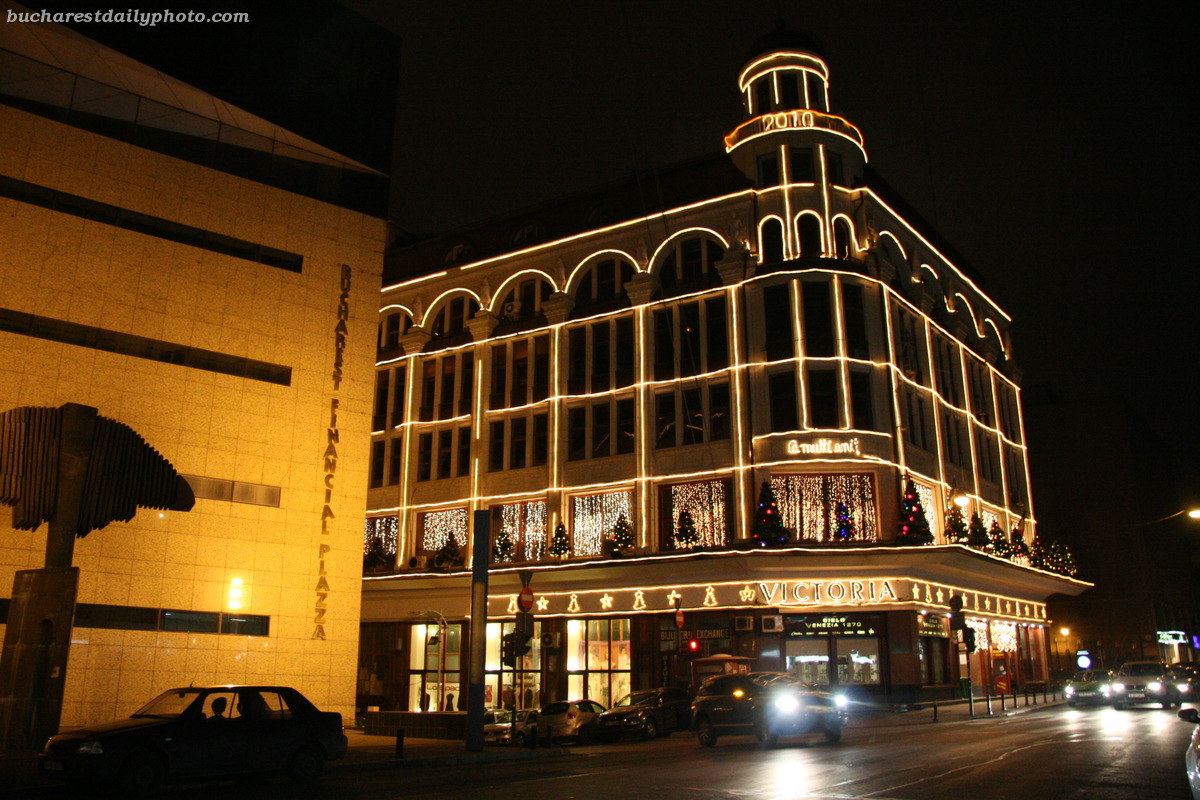
In an effort to draw customers inside, many stores have joined in the holidays spirit and decorated their facades with lights, Christmas trees and ornaments. Such is the case of the store in today’s photo, the Victoria Department Store on Calea Victoriei. Department store is a bit of a misnomer because last time I was inside it the store looked more like an chaotic indoor bazaar rather than a shopping mall. Once upon a time Victoria Department Store was called Galeries Lafayette, a modern store modeled after the great Parisians stores. When it was built, the idea of a “universal store” (as it was called at the time) was a new one in Bucharest where people were used to the small shops that stood right nearby on the area called Lipscani. It was built in 1928 in Art Deco style after plans made by architect Herman Clejan. Under the communists the store’s slogan was “Victoria Department Store, 50 stores in one” and this inspired one of the most famous jokes of the regime about a salami that was also called Victoria, whose slogan said the joke was “one salami in 50 stores” hinting to the lack of basic food during that time.
I’m back online after more than 48 hours of absence. No, the snow didn’t reach the first floor window
but the server’s hard drive, bought and installed last June, crashed. It took my husband two days to recover all the data (the backup was ten days old) and to install a new server. I hope my karma has changed now and this won’t happen again.
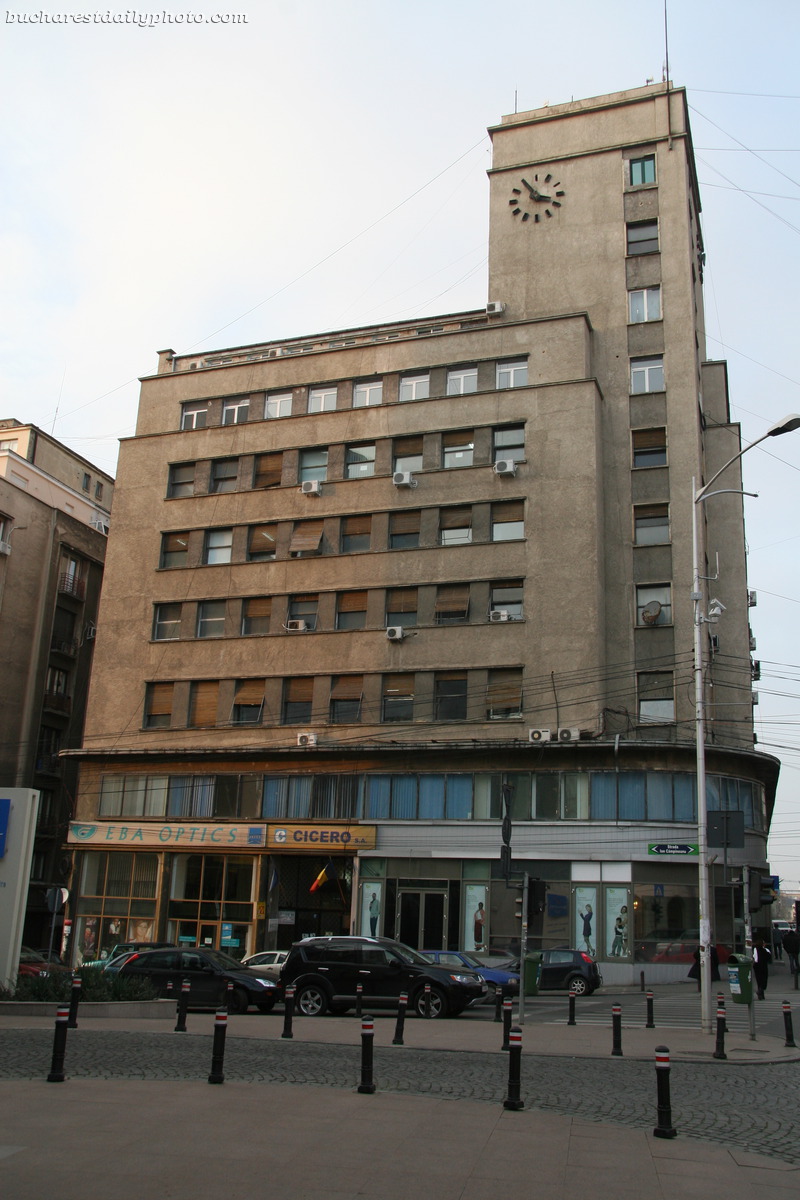
My first photo after this break is a straightforward shot of the building whose tower was featured in last post’s reflection. As I said in that post this is an office building build in modernist style in 1936-1937 by architects Rudolf Fraenkel, Teller and Dem Săvulescu. It is known as “Adriatica building”. By following this link you can see a photo of the building dating from late 30s.
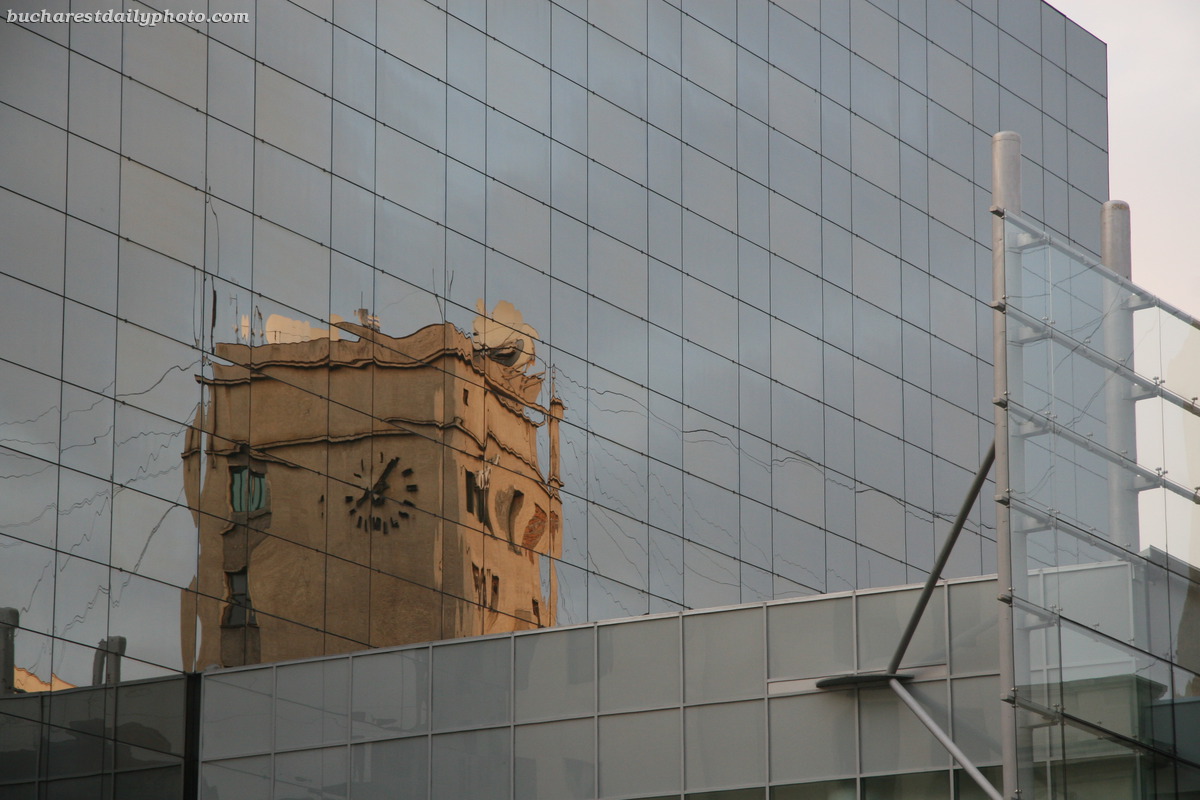
As I said in one of my previous posts, I’m a sucker for reflection photos. I believe that in photography reflections can bring out amazing effects and make us look at things through a different perspective. So here is another one of my tries at getting a nice reflection photo. This one was taken in downtown Bucharest and it shows the tower of the modernist Adriatica office building (1936) reflected at sunset in the Novotel Hotel.
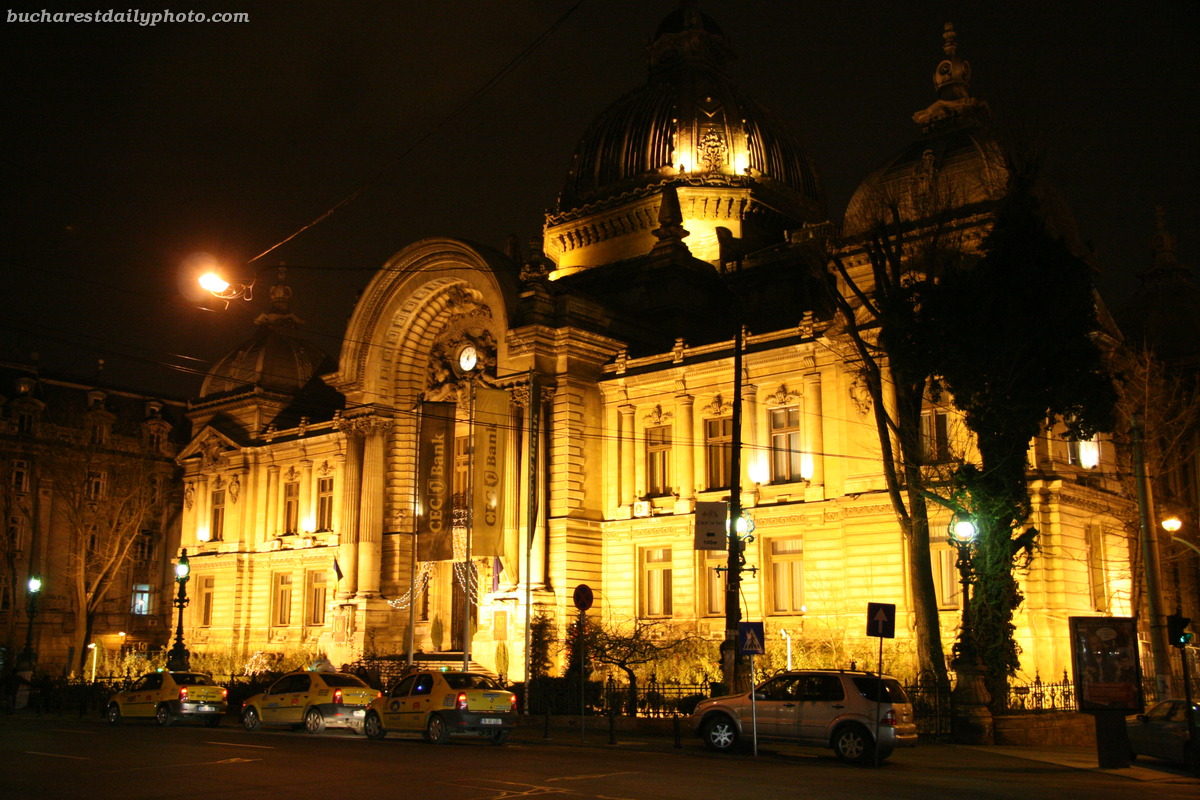
Continuing the nightly stroll on Victory Road, here’s a shot of the Romanian Savings Bank, which I already introduced a few days ago with this post. Designed in eclectic style by the French architect Paul Gottereau and raised between the years 1896-1900, this was the only bank that was allowed to do business during communism when it served as the state savings bank called “CEC” (“Casa de Economii şi Consemnaţiuni” in Romanian) where people used to keep their savings. After the 1990 Revolution, when other banks were allowed to open offices in Romania, the CEC lost many of its customers. The bank was privatized and now it’s called “CEC Bank”. I’ve read in the newspaper that the building is set to become a museum but at this moment is still used as a bank.
Victory Road at night – Part 1
Victory Road at night – Part 2
Victory Road at night – Part 3
Yesterday was Theme Day at the City Daily Blog community, a monthly event that happens the first day of every month, when all participating blogs are posting a picture that relates to the theme day’s description. Just fresh back from vacation, and half asleep for half of the day, I completely forgot about it
So I decided to post a theme photo today. The theme for this month was “Contrast” and I’ve seen people interpreted it in different ways. Contrast in colors, contrast in sizes, old versus new etc. My picture for today shows old versus new architecture. We have here two banks: the old one, the “Romanian Savings Bank:”, was designed in eclectic style by the French architect Paul Gottereau and raised between the years 1896-1900; the new one, in the background, named “Bucharest Financial Plaza”, designed by Ruxandra Fotino and Sorin Ştefănescu, was built almost 100 years later, in 1994-1996, being the first tall building in the historic center.
Today is another crazy day when I’ll be traveling for 20 hours and I won’t have time for a lengthy post. But I didn’t want to miss the day so I decided to post a photo on a subject that I’ve already written about, just shot from another angle. This was one of my first posts so some of you might have missed it. Today’s subject is the Iuliu Maniu statue in Revolution Square and you’ll find the initial photo here.